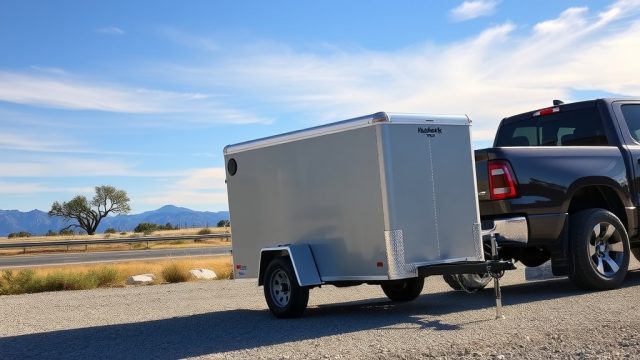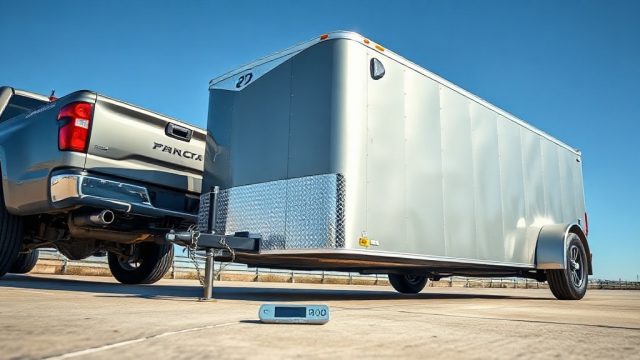
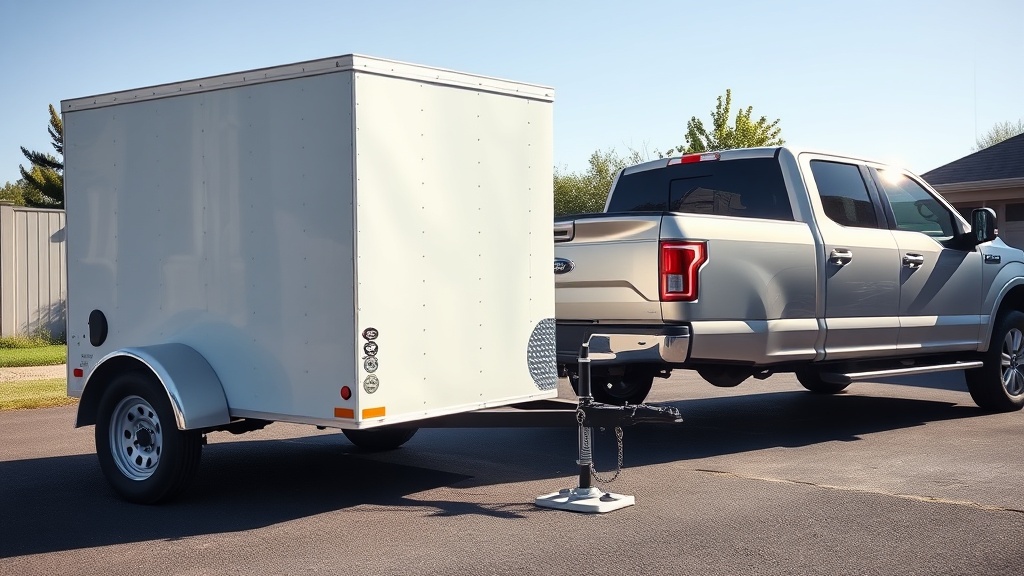
Why Does Tongue Weight Matter on a Continental Cargo Cargomate 6×10?
Getting the tongue weight right on a Continental Cargo Cargomate 6×10 is one of the most overlooked aspects of trailer safety. Too little weight and the trailer will sway at highway speeds; too much and your tow vehicle’s rear suspension gets overwhelmed, steering becomes light, and braking distances stretch dangerously. The Cargomate 6×10, with its steel floor I-beam frame and 7-foot interior height, sits right in the middle of the compact utility class, but its loaded tongue weight can swing wildly depending on how you arrange cargo inside. This guide walks you through measuring, adjusting, and dialing in your tongue weight so every trip stays stable, whether you’re hauling ATVs, landscaping gear, or construction materials.
The factory curb weight of an empty Cargomate 6×10 typically lands around 1,200–1,350 lbs, and the manufacturer recommends a tongue weight between 10% and 15% of total loaded weight. For a trailer that maxes out at 3,500 lbs GVWR (most common single-axle configuration), that means you want between 350 and 525 lbs on the ball. If you’re running a 5×10 or a heavy-duty tandem axle upgrade, those numbers shift slightly, but the 10–15% rule holds. Let’s break down how to measure it accurately and what to do when the scale says you’re off.
How Do You Measure Tongue Weight on a Cargomate 6×10?
You have three reliable methods, each with trade-offs in cost and convenience. For the home mechanic, a dedicated tongue weight scale is the gold standard, but a bathroom scale and a length of pipe can get you close enough for safe setup. Here’s the breakdown.
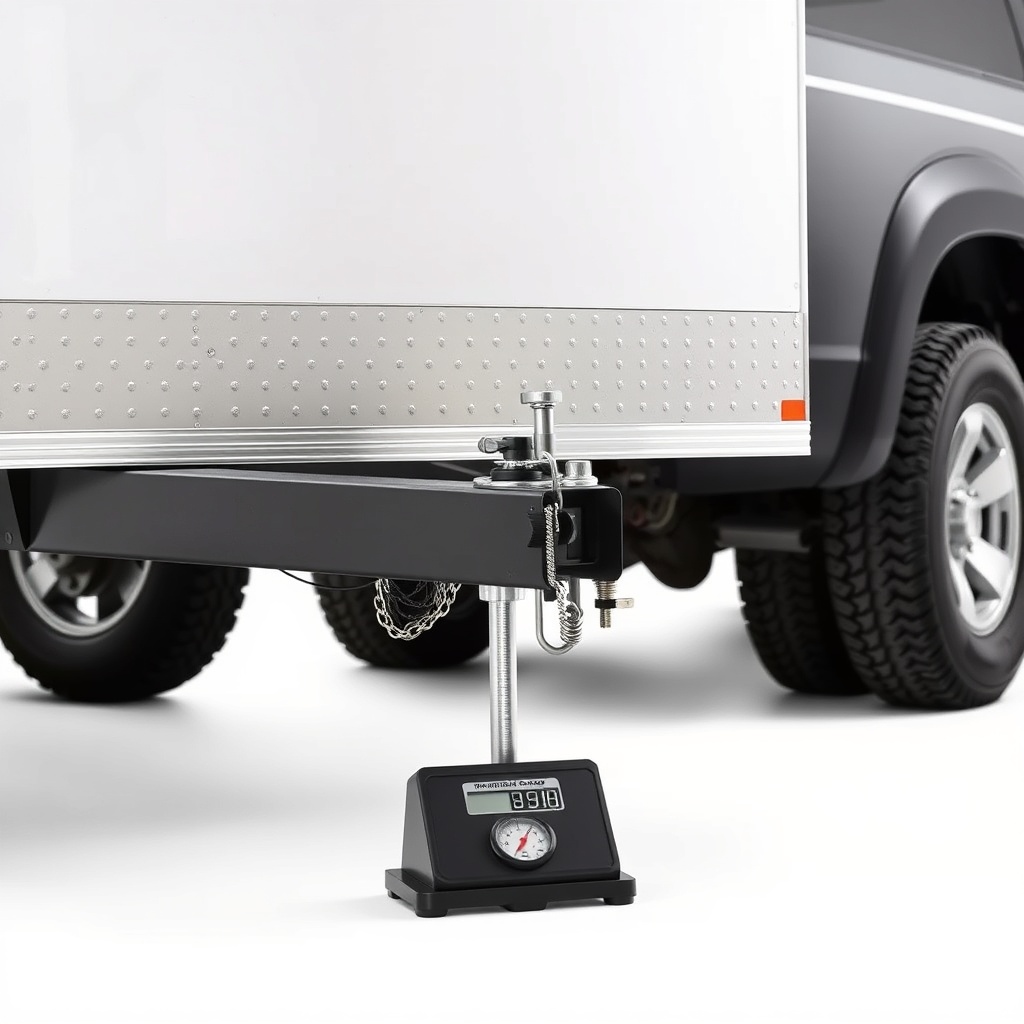
Method 1: Dedicated Tongue Weight Scale
Buy a 1,000-lb capacity trailer tongue scale (around $80–$120 USD locally). Place the scale under the tongue jack, with the coupler at hitch height. Crank the jack down until it lifts the tongue off the ground and all weight rests on the scale. Read the measurement directly. This is the quickest and most repeatable method.
Method 2: Bathroom Scale and a Pivot Pipe
If you don’t want to drop cash on a specialized tool, use a 200-lb digital bathroom scale (about $25 USD). Place the scale on a level surface, set a 4×4 wood block of the same height next to it, then lay a 3-foot length of 2-inch steel pipe across both. Position the tongue coupler so it rests at the midpoint of the pipe. Crank the jack down until the tongue is supported by the pipe, and read the scale. Multiply that reading by 2 to get the actual tongue weight. For example, if the scale reads 180 lbs, actual tongue weight is 360 lbs.
Method 3: CAT Scale or Truck Stop Scale
Drive onto a CAT scale with the trailer hitched, weigh only the tow vehicle’s rear axle, then weigh the whole rig. The difference between the two rear axle weights gives you the partial tongue weight contributed by the trailer. This is less precise because it includes weight transfer from the hitch itself, but it works in a pinch if you haul near a weigh station regularly.
What Are the Safe Tongue Weight Limits for a 6×10 Cargomate?
There is no one-size-fits-all number because the load inside changes everything. The table below shows recommended ranges for typical load scenarios you’ll see with a Continental Cargo Cargomate 6×10. Always aim for the upper half of the range for stability, but never exceed the tow vehicle’s maximum tongue weight rating—usually 500–600 lbs for a half-ton pickup, 350–400 lbs for a midsize SUV.
| Load Scenario | Total Trailer Weight (lbs) | Recommended Tongue Weight (lbs) | Severity If Ignored |
|---|---|---|---|
| Empty (no cargo) | 1,200 | 120–180 | Moderate sway risk |
| Light utility (lawn mower + tools) | 2,000 | 200–300 | Moderate sway risk |
| ATV or motorcycle (one unit) | 1,800 | 180–270 | Significant sway risk |
| Furniture / household goods | 2,500 | 250–375 | High sway risk |
| Construction materials (mixed) | 3,000 | 300–450 | High stability issue |
| Maxed GVWR (legal limit) | 3,500 | 350–525 | Critical hazard |
If your measured tongue weight falls below 10% of total weight, you’ll experience trailer sway that gets worse with speed. If it’s above 15%, you risk overloading the rear axle of your tow vehicle, causing the front wheels to lose traction and the headlights to point skyward at night. For a detailed guide on how tire pressure interacts with load distribution, see our Continental Cargo Cargomate 6×10 Tire Pressure and Load Rating Guide.
How Do You Adjust Tongue Weight When It’s Too Light?
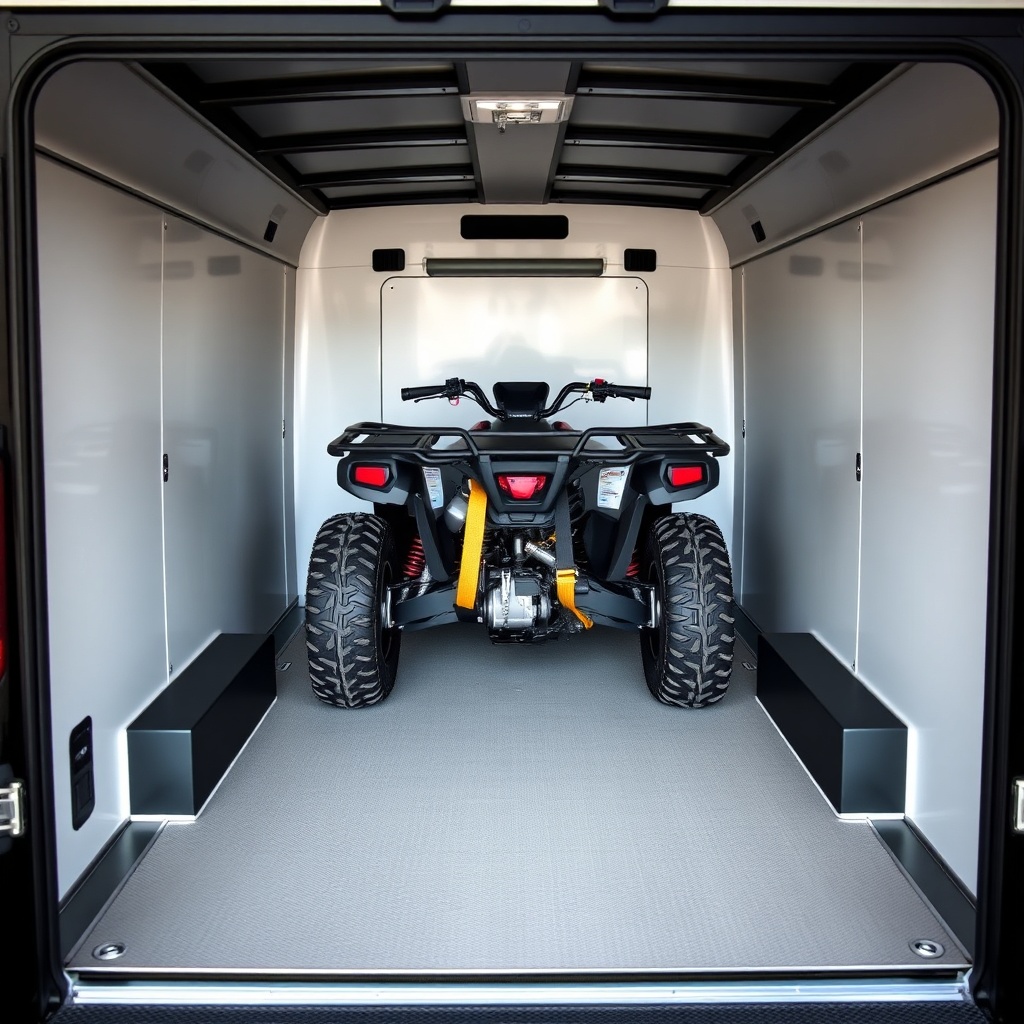
A light tongue, say 150 lbs on a 2,500-lb loaded trailer, means too much weight sits behind the axle. The fix is straightforward: shift cargo forward inside the trailer. Ideally, you want 60–70% of the load placed in the front half of the cargo area. If you’re hauling a single ATV or motorcycle, position it so its center of gravity is 6 to 12 inches ahead of the axle line—not all the way to the nose, but forward enough to shift weight onto the tongue.
If you can’t physically move cargo forward because of space constraints (e.g., a long piece of lumber that extends past the gate), add ballast. A pair of 60-lb sand tubes strapped to the front of the floor deck adds 120 lbs to the tongue and can bring a too-light trailer into the safe zone. Keep in mind that the ballast counts toward your GVWR, so factor it in.
For trailers with the adjustable channel system Continental Cargo offers, you might also try moving the axle backward slightly if the frame allows. This reduces the lever arm behind the axle, effectively increasing tongue weight for the same load. Check your frame’s axle-mount bolt pattern before attempting—most Cargomates use fixed-position spring hangers, so this isn’t an option unless you’re willing to drill new holes or buy an adjustable spring perch kit.
How Do You Adjust Tongue Weight When It’s Too Heavy?
An overly heavy tongue—say 500 lbs on a 2,500-lb loaded trailer—happens when you load equipment like a zero-turn mower or mini skid steer too far forward, or when you pack heavy items like concrete blocks or steel beams right against the front wall. The first instinct is to move cargo rearward, but be careful: shifting weight too far behind the axle creates its own sway problem. A better approach is redistributing by moving some heavy items from the front cargo area to just behind the axle, leaving lighter bulk items forward.
If you cannot rearrange cargo, consider adding a weight-distributing hitch (WDH). A properly set WDH transfers some of the tongue weight back to the trailer axles and forward to the tow vehicle’s front axle, restoring steering feel and leveling the rig. The Cargomate 6×10’s frame typically has a 2-inch receiver, so you can use a standard WDH with 600–800 lb spring bars. Keep in mind that WDHs are more common on travel trailers, but they work fine on utility trailers as long as you don’t exceed the hitch and frame ratings.
Also check the Continental Cargo Cargomate 6×10 Gate Spring Hookup: Secure Cargo with Proper Tension guide to ensure the ramp gate isn’t adding unexpected weight when it’s in a partially open position during loading—a common mistake that skews weight distribution.
What Are the Symptoms of Incorrect Tongue Weight on the Road?
You don’t need a scale to know you’re wrong—the trailer and tow vehicle will tell you. Here are the warning signs and what they mean.
Too Light Tongue Symptoms:
- Trailer fishtailing at speeds above 50 mph, especially in crosswinds or when passed by larger vehicles.
- The tow vehicle’s rear end feels “floaty” over bumps, with reduced steering authority.
- The trailer’s tires chirp on sharp curves because the rear end is unloaded and bouncing.
- The coupler seems to bounce off the ball at expansion joints or dips.
Too Heavy Tongue Symptoms:
- The front of the tow vehicle lifts noticeably, making the steering feel light and vague.
- Headlights point upward, blinding oncoming traffic and reducing your own night vision.
- The rear suspension of the tow vehicle bottoms out over driveways or railroad crossings.
- You feel excessive brake dive because the rear brakes do more work than the front.
If you experience any of these, pull over at the next safe spot and recheck your tongue weight. A quick field test: unhitch the trailer, lift the coupler to hitch height with your hands. If you can lift it easily, the tongue is too light. If you struggle to lift it, you’re probably in the safe range. This isn’t scientific, but it works as a rough sanity check.
What Owners Say About Tongue Weight on the Cargomate 6×10
Real owners consistently report that the Cargomate 6×10 is stable when loaded properly, but the factory default setup leaves little room for error. On forums and trailer owner groups, the most common complaint is that the tongue weight reads around 180–200 lbs empty, which is fine for an empty trailer but dangerously low once you add 1,500–2,000 lbs of cargo behind the axle. Many owners retrofit a front-mounted toolbox or add a few sandbags to steady things.
Mike from Ohio, who hauls a Polaris Sportsman 570, says: “Empty, it tows like a dream, but the moment I load the ATV with the weight too far back, the tail starts wagging the dog. I shifted the tie-downs to keep the ATV about 8 inches forward of the axle centerline, and now it tracks straight at 65 mph. My tongue weight went from 140 lbs to 270 lbs—night and day.”
Susan in Texas uses hers to move furniture and appliances for her remodeling business. “I had the rear-end squat problem bad with a heavy fridge packed against the front wall. Moved the fridge to just behind the axle and put the lighter empty boxes up front, and the truck sat level again. The tongue weight dropped from 600 lbs to 420 lbs—still on the higher end, but safe.”
One recurring theme: owners recommend checking tongue weight after every major load change, not just once. The same trailer loaded with lumber versus plywood sheeting produces dramatically different numbers. For electrical or lighting upgrades that help you see the load area at night, check our Continental Cargo Cargomate 6×10 Interior Lighting Upgrade: LED Strip Installation Guide.
Frequently Asked Questions
Q: Can I use a weight-distributing hitch on a Continental Cargo Cargomate 6×10?
A: Yes, but only if your trailer’s frame is rated for it. Most Cargomate 6×10 models with a 2-inch receiver and a GVWR of 3,500 lbs or less can handle a light-duty WDH. Consult your owner’s manual or contact Continental Cargo directly to confirm the frame’s maximum allowable tongue weight with a WDH—some builder-grade frames aren’t designed for the added stress.
Q: What if I can’t access a scale before a trip?
A: Use the 10–15% rule with a bathroom-scale-and-pipe method at home. It takes 5 minutes and is more accurate than guessing. If you’re on the road, find a truck stop with a CAT scale—many allow one free re-weigh if you buy a ticket.
Q: Will changing tire pressure affect tongue weight measurement?
A: No, tire pressure doesn’t directly change tongue weight, but underinflated tires can alter the trailer’s pitch slightly by sagging. Always inflate tires to the recommended pressure before measuring—our Continental Cargo Cargomate 6×10 Tire Pressure and Load Rating Guide has exact specs for your axle rating.
Q: How often should I recheck tongue weight?
A: Every time you change the load configuration. If you add or remove more than 200 lbs of cargo, or if you shift items from front to back, re-measure. Even moving a heavy toolbox from the front to the rear of the trailer can change tongue weight by 50–100 lbs.
Q: Can a roof leak cause hidden weight that affects tongue weight?
A: Yes. Water intrusion in the front nose section adds several hundred pounds of hidden weight, which can throw off your tongue weight calculation. If you suspect water pooling, see Continental Cargo Cargomate 6×10 Roof Leak Causes and Permanent Fix to inspect and seal the seams.
Q: Does tongue weight affect brake performance on the Cargomate 6×10?
A: Absolutely. Too much tongue weight reduces rear-axle load, which can make the surge brake actuator (if equipped) less effective on electric-over-hydraulic systems. For electric brakes, an imbalanced tongue can cause uneven braking force. Tune your brakes after tongue weight adjustments using the Continental Cargo Cargomate 6×10 Electric Brake Adjustment Guide.