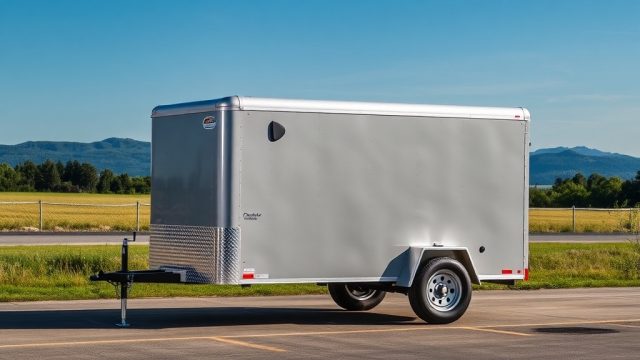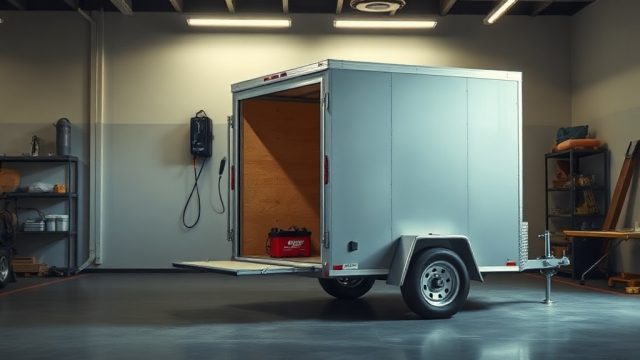
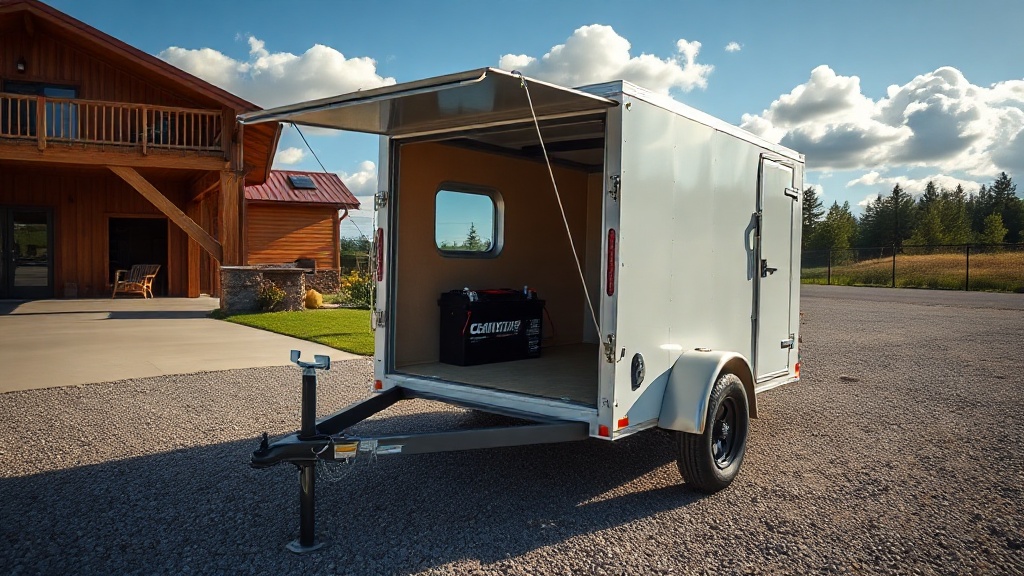
How Often Should the Battery on a Continental Cargo Cargomate 6×10 Be Checked?
A deep-cycle battery powering the breakaway system on a Continental Cargo Cargomate 6×10 should be inspected at least once every 30 days, even during storage. Leaving the battery unchecked while the trailer sits idle is the fastest path to sulfation and permanent capacity loss. The integrated breakaway switch draws a small parasitic current, so without a maintenance charge, voltage can drop below 12.4 V within three to four weeks. Regular monthly checks involve a simple voltmeter reading and a visual inspection of the terminals for corrosion or loose connections. If the trailer is used weekly in stop-and-go towing, shift to a bi-weekly check to catch any charging irregularities from the tow vehicle earlier.
A well-maintained battery ensures that the electric brakes engage properly in an emergency breakaway scenario. For more details on other critical safety components, review the Continental Cargo Cargomate 6×10 Coupling Latch Inspection and Maintenance Guide.
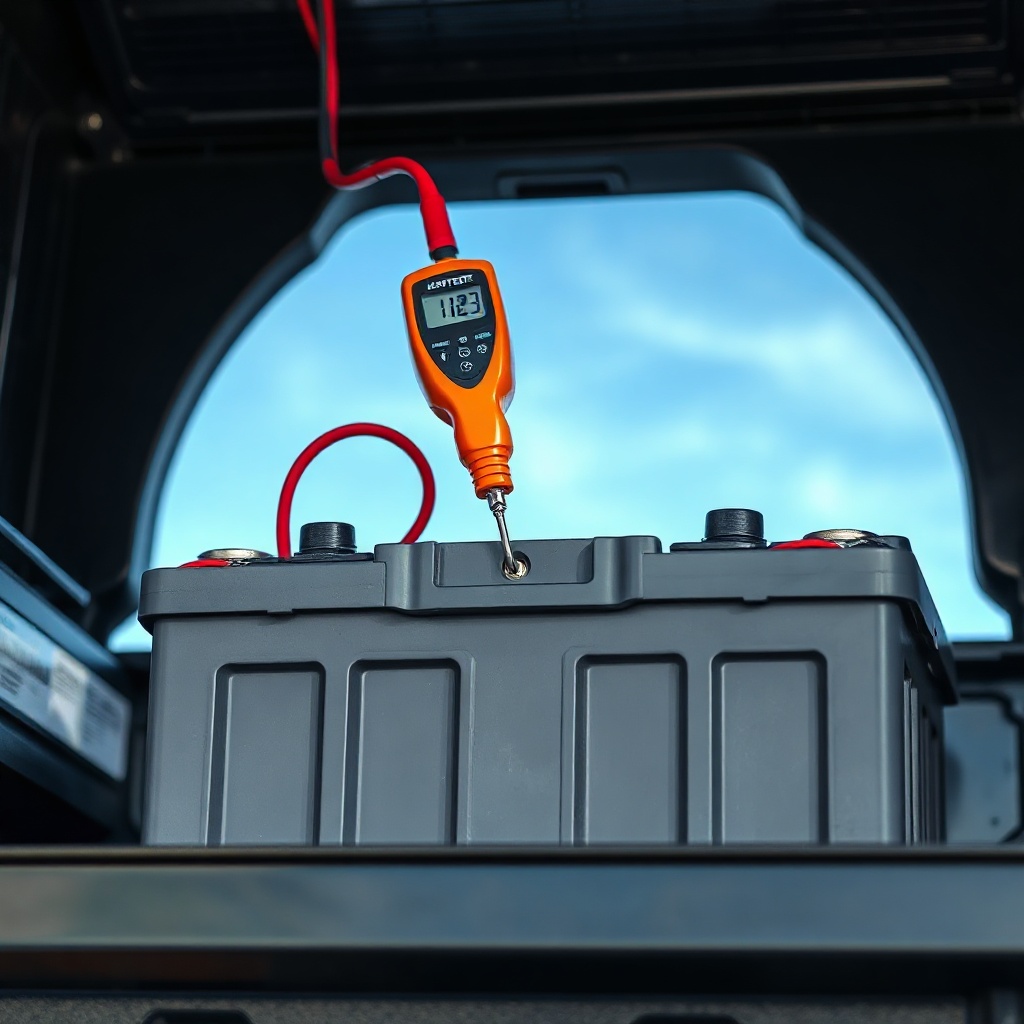
What Is the Correct Charging Voltage and Current for the Cargomate 6×10 Battery?
For a standard Group 24 deep-cycle lead-acid battery—the factory-installed type in most Cargomate 6×10 units—the absorption charging voltage should be set between 14.4 V and 14.8 V, with a float voltage of 13.2 V to 13.5 V. The maximum charging current should not exceed 25% of the battery’s amp-hour (Ah) rating. If the battery is rated at 75 Ah, that means a charger delivering no more than 18.75 A. Using a standard automotive battery charger set to a higher amperage can warp the internal plates and vent electrolyte. A smart charger with a dedicated “deep-cycle” or “AGM” mode is strongly recommended.
Temperature compensation matters: for every 10°F above 80°F, reduce the absorption voltage by 0.1 V; for every 10°F below 80°F, increase it by 0.1 V. This prevents overcharging in summer heat and undercharging in winter cold. Below is a quick reference table for proper charging parameters.
| Battery Type (Cargomate 6×10) | Absorption Voltage | Float Voltage | Max Charge Current (75 Ah) | Temperature Compensation |
|---|---|---|---|---|
| Flooded Lead-Acid (Standard) | 14.4 V – 14.8 V | 13.2 V – 13.5 V | 18.75 A | ±0.1 V per 10°F |
| AGM (Optional Upgrade) | 14.6 V – 14.8 V | 13.4 V – 13.6 V | 15 A (20% of Ah) | ±0.1 V per 10°F |
| Lithium (Aftermarket) | 14.2 V – 14.6 V | 13.3 V – 13.5 V | 30 A (0.4C max) | No compensation needed |
Why Does the Battery Drain Faster in Cold Weather?
Lead-acid chemistry loses roughly 35% of its effective capacity at 32°F compared to 80°F. In a Continental Cargo Cargomate 6×10 stored outside in a Midwestern winter, a battery that normally holds 75 Ah may only deliver 50 Ah. The breakaway system’s parasitic drain (typically 5 mA to 15 mA) becomes proportionally larger against that reduced capacity. At 10°F, the battery might show 12.2 V at rest but drop to 11.8 V under a minimal load, which can trigger the breakaway alarm falsely. To counter this, store the trailer with a fully charged battery (12.6 V or higher) and consider using a solar maintainer panel placed on the roof. For related tips on roof-mounted accessories, see Continental Cargo Cargomate 6×10 Roof Vent Condensation Prevention Tips.
How to Perform a Proper Load Test on the Cargomate 6×10 Battery?
A simple voltage reading doesn’t reveal internal resistance or sulfation. A load test applies a known current—usually half the Cold Cranking Amps (CCA) rating for 15 seconds—while monitoring voltage. For the Cargomate 6×10’s typical deep-cycle battery, a purpose-built load tester set to the battery’s Ah rating (not CCA) is more appropriate. Many auto parts stores offer free testing, but owners can perform a field test: with the battery fully charged and rested for 12 hours, connect a 10-ohm, 50-watt resistor across the terminals (drawing about 1.2 A). The voltage should stay above 12.2 V for 10 minutes. If it drops below 12.0 V within 5 minutes, the battery has diminished capacity and should be replaced. Always disconnect the negative terminal first before performing any test to avoid accidental shorts on the trailer’s tongue.
What Are the Common Charging Mistakes Owners Make?
Three errors appear repeatedly in owner forums. First, using a standard 10-amp automotive charger on a depleted deep-cycle battery. The high current causes excessive gassing and boils off electrolyte in flooded cells. Second, leaving the battery connected to a trickle charger without an auto-shutoff. Over weeks, this cooks the battery, especially in hot climates. Third, charging the battery while it remains connected to the trailer’s breakaway system. The breakaway controller can confuse the charger, leading to undercharging. Always disconnect both terminals from the trailer before charging, or use a battery disconnect switch. For additional preventive maintenance, refer to the Continental Cargo Cargomate 6×10 Rust Inspection and Prevention Guide to ensure the battery tray and terminals remain corrosion-free.
What Owners Say About Cargomate 6×10 Battery Life
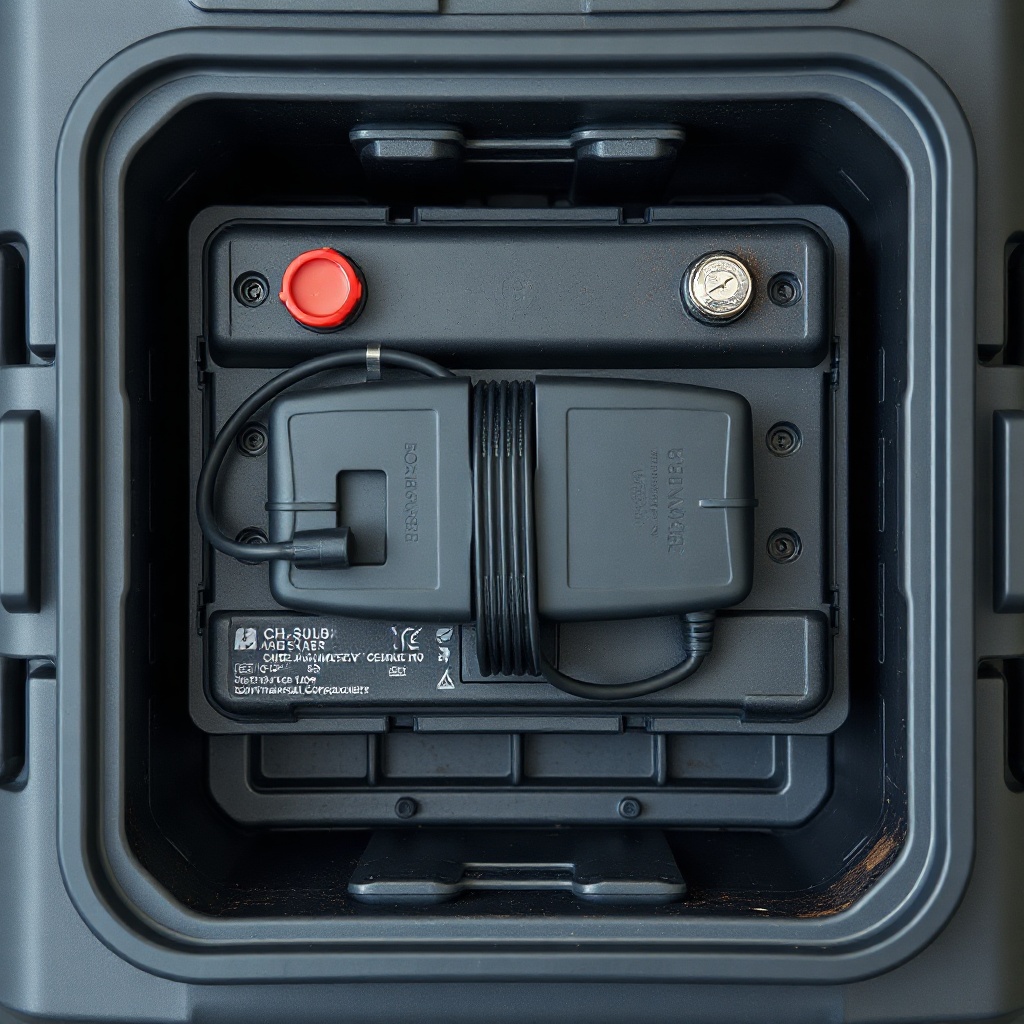
Long-time owners agree on two points: the factory battery is adequate for light seasonal use but marginal for year-round hauling. A contributor from Arizona reported that the original flooded battery lasted 18 months before failing to hold a charge above 12.0 V. He switched to an AGM battery and extended service life to over four years. Another owner in the Pacific Northwest emphasized that the compact tongue box limits battery size—Group 24 fits snugly, and any larger battery requires modification of the mounting bracket. Several owners note that the breakaway system’s parasitic draw can be reduced by adding an inline toggle switch on the positive wire, though local regulations may require the breakaway circuit to remain always active. Check your state requirements before modifying. For owners converting the rear door, the battery location may need to be temporarily moved; see the Continental Cargo Cargomate 6×10 Ramp Door Conversion: Step-by-Step Guide for clearance considerations.
Frequently Asked Questions
Q: Can I use a standard car battery charger on my Cargomate 6×10 battery?
A: Only if the charger has a “deep-cycle” or “AGM” mode set below 15 A. Standard automotive chargers can overheat and damage the battery over time.
Q: What size battery does the Continental Cargo Cargomate 6×10 take?
A: A Group 24 deep-cycle battery (typically 75 Ah) fits the factory tongue box. Group 27 may fit with minor bracket adjustment, but always measure first.
Q: How do I know if the breakaway battery is bad?
A: Perform a load test as described above. If voltage drops below 12.0 V under load within 5 minutes, the battery needs replacement.
Q: Should I disconnect the battery when storing the trailer for winter?
A: Yes. Fully charge the battery, disconnect both terminals, and store it in a cool (40-50°F) location. Reconnect and trickle charge monthly.
Q: Can I install a solar panel to keep the battery topped up?
A: Yes, a 5-10 watt solar panel with a charge controller works well. Mount it on the roof, but ensure it does not exceed the Continental Cargo Cargomate 6×10 Roof Load Capacity Analysis: What You Can Safely Carry for weight limits.
Q: What voltage should the battery read after a full charge?
A: At rest (12 hours after charging), a healthy lead-acid battery should read between 12.6 V and 12.8 V. Below 12.4 V indicates a partial discharge or sulfation.