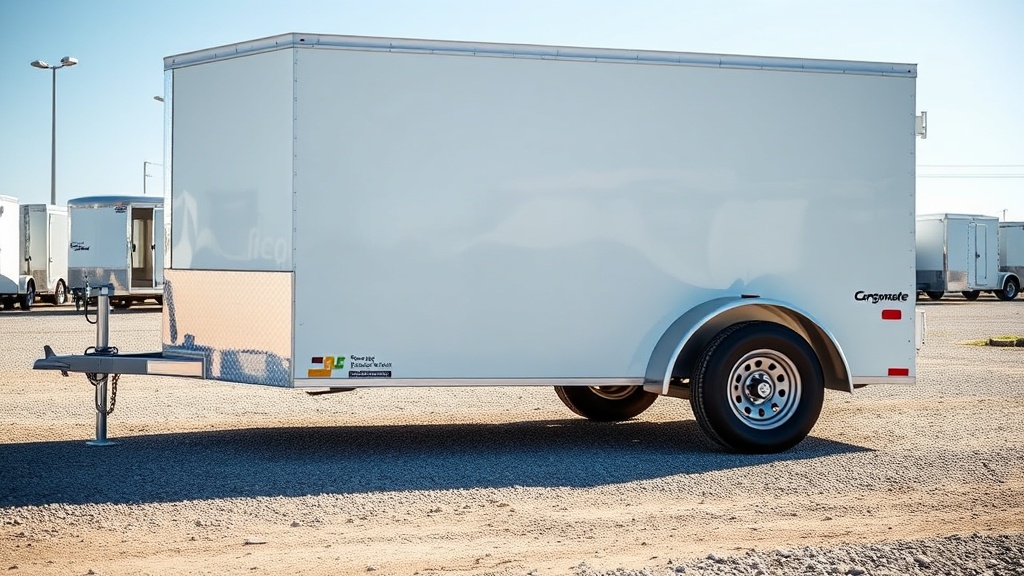
What Is the Correct Cold Tire Pressure for a Continental Cargo Cargomate 6×10?
The manufacturer specifies a cold tire pressure of 50 PSI (345 kPa) for the standard ST205/75R15 tires fitted to the Continental Cargo Cargomate 6×10. This value applies when the tires have been sitting for at least three hours or have been driven less than one mile at moderate speed. Always check pressure with a calibrated gauge before loading the trailer, not after a long trip when heat has artificially increased the reading. Under-inflated tires cause excessive sidewall flex and heat buildup; over-inflation reduces the contact patch and leads to uneven tread wear. For models that have been upgraded to optional ST225/75R15 tires (common on heavier payload builds), the recommended pressure rises to 65 PSI. Verify your specific tire sidewall markings, but 50 PSI remains the baseline for factory-spec units.
Related reading: Continental Cargo Cargomate 6×10: Aluminum vs Steel Frame Durability discusses how frame material affects overall weight and tire load distribution.
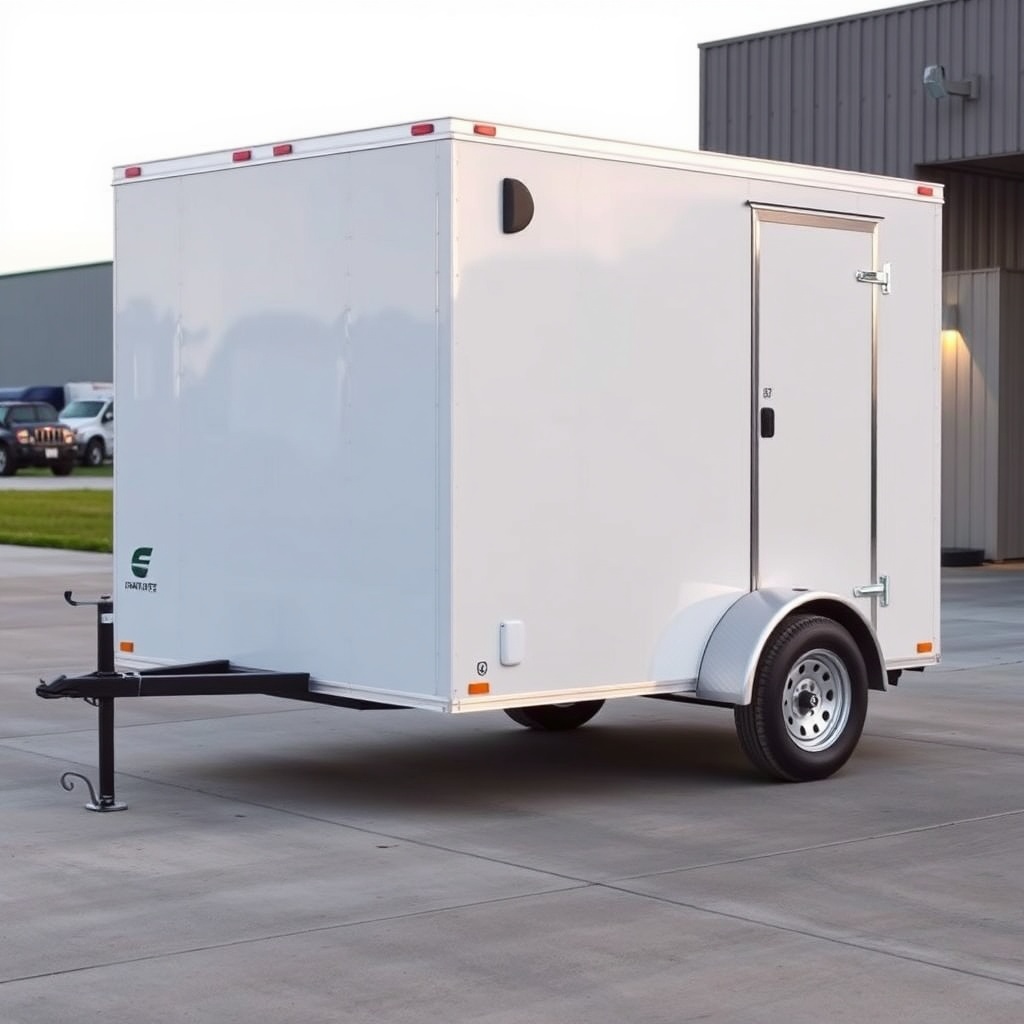
What Is the Gross Vehicle Weight Rating (GVWR) and Payload Capacity of This Trailer?
The Continental Cargo Cargomate 6×10 carries a GVWR of 2,990 lbs (1,356 kg). The unladen weight (curb weight) of the trailer with a steel frame and standard plywood walls is approximately 950 lbs. That leaves a maximum payload capacity of 2,040 lbs. However, payload includes the weight of any cargo, the tongue weight (typically 10–15% of total loaded weight), plus added accessories like spare tires, battery boxes, or side racks. Load distribution must not exceed the tire load rating. Each factory ST205/75R15 tire at 50 PSI is rated for 1,360 lbs at 50 PSI, giving a combined axle capacity of 2,720 lbs—just under GVWR. That margin is intentional; the tires should never see the full 2,990 lbs GVWR without exceeding their individual rating. The hitch rating (typically 350 lbs tongue weight max for a Class III receiver) also limits how much can be placed forward of the axle.
Compare specs across models: Best Cargo Trailer for Motorcycle Hauling: 6×10 vs 6×12 vs 7×14 shows how the 6×10 Cargomate stacks up against larger trailers in load capacity.
How Do I Read the Load Rating and Speed Symbol on the Tires?
Every ST205/75R15 tire on the Cargomate carries a service description such as “113/111M” or “113Q” molded into the sidewall. The load index number (113 here) indicates the maximum load capacity per tire at the specified pressure: 113 = 2,535 lbs, but that’s for a single tire in a dual configuration. For single tire application on a trailer axle (which is the case here), you must use the lower of the two numbers: typically 111 = 1,360 lbs. The speed symbol “M” means rated up to 81 mph, “Q” up to 100 mph. Never exceed the speed symbol limit, especially when towing with a small car—see our guide on Towing a Continental Cargo Cargomate 6×10 with a Small Car: What to Know. Always cross-reference the sidewall data with the tire placard affixed to the trailer’s tongue or front frame. If the placard is missing, refer to the owner’s manual or contact Continental Cargo directly.
What Are the Warning Signs of Overload or Underinflation?
Overloaded or improperly inflated tires on a Cargomate 6×10 show clear symptoms:
- Excessive sidewall bulge – visible when the trailer is parked on level ground. The sidewall near the ground appears pushed out.
- Heat buildup – after a 30-minute highway run, touch the tire tread. If too hot to hold for more than two seconds, pressure is likely too low or load too high.
- Cupping or scalloped wear – uneven tread wear across the tire circumference indicates underinflation or out-of-balance loads.
- Center tread wear – overinflation or running at 55 PSI+ on standard ST205/75R15 tires.
- Bouncing or sway at highway speeds – often caused by underinflated tires combined with improper tongue weight.
If you notice any of these, stop and inspect immediately. A blowout at highway speeds can cause the trailer to fishtail and tip.
How Often Should I Inspect and Rotate Tires on This Trailer?
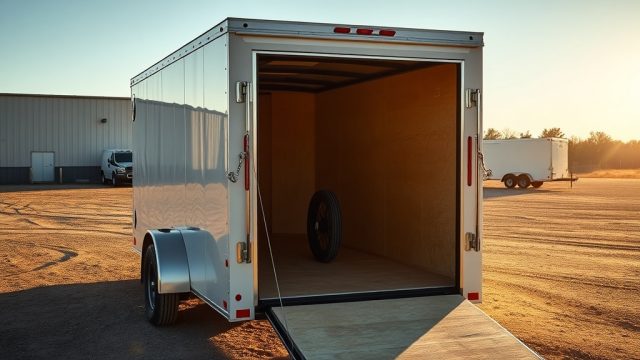
Continental Cargo recommends a full tire pressure and condition check before every trip, not just seasonally. Visual inspections should look for cuts, bulges, or uneven wear patterns. Tire rotation is less critical on a single-axle trailer because the tires do not swap sides in the same way as dual-axle trailers, but many owners rotate them every 5,000 miles to even out slight wear variations from left-right road camber. More importantly, check the spare tire on the Cargomate 6×10—it is often stored under the frame where UV and road salt damage it faster than the running tires. Replace any tire that is more than six years old from the date of manufacture, regardless of tread depth. The DOT code on the sidewall ends with four digits indicating the week and year of manufacture (e.g., “3520” = 35th week of 2020). Do not run tires beyond the 6-year mark, even if they look fine.
| Task | Frequency | Notes |
|---|---|---|
| Check cold tire pressure (all tires including spare) | Before each trip | Use dedicated digital gauge; do not rely on gas station gauges |
| Visual inspection for damage | Before each trip | Look for cracks, bulges, embedded debris, valve stem leaks |
| Check wheel lug nut torque (90–100 lb-ft) | After first 50 miles, then every 3,000 miles | Re-torque after removing a wheel |
| Check spare tire condition | Every 6 months | Spare often overlooked; replace if more than 6 years old |
| Professional balance and rotation | Every 5,000 miles or annually | Reduces vibration and extends tread life |
| Tire replacement | 6 years from date of manufacture | Replace all four tires even if spare looks acceptable |
What Do Owners Report About Tire and Load Issues With the Cargomate 6×10?
Long-time owners consistently praise the trailer’s towing stability but caution against exceeding the tire load rating. Many report that the factory ST205/75R15 tires lose pressure slowly over weeks—dropping from 50 PSI to 35 PSI in a month—so weekly checks are essential. Several owners on forums have upgraded to LT (Light Truck) tires for extra durability when carrying heavy motorcycles or ATVs, accepting a slightly harsher ride. A common complaint is that the spare tire mount location (under the front frame) exposes the spare to road debris and salt, causing premature sidewall cracking. One owner in Michigan reported replacing all four tires after three years due to weather checking. On the positive side, when properly inflated and loaded within the 2,040 lb payload limit, owners report no issues with tire integrity even on long 8-hour trips. Some owners of the steel-framed version note that because the trailer weighs 100–150 lbs more than the aluminum version, their payload margin is smaller—something to consider when loading heavy cargo.
See related fix for a common issue: Fixing the Continental Cargo Cargomate 6×10 Ramp Door Latch Issue covers a frequent owner repair.
Frequently Asked Questions
Q: Can I use LT tires instead of ST tires on my Cargomate 6×10?
A: Yes, but only if they match the load rating and wheel size. LT tires have a stiffer sidewall and higher speed rating, but they also run at higher pressures and reduce ride comfort. Ensure the new LT tire’s maximum load at the pressure you plan to run equals or exceeds the ST tire’s rating. Many owners switch to LT225/75R15 D-range tires (65 PSI) when hauling over 1,800 lbs regularly.
Q: What should the tongue weight be for a Cargomate 6×10 loaded to 2,900 lbs GVWR?
A: Aim for 10–15% of total trailer weight on the tongue. At 2,900 lbs loaded, that is 290 to 435 lbs. Most Class III hitches are rated to 500 lbs tongue weight, but the Cargomate’s coupler is typically rated for 350 lbs. Keep tongue weight under that limit—scales at a truck stop can confirm. Too light increases sway; too heavy overloads the hitch.
Q: My Cargomate 6×10 tires are wearing out in the center. What’s wrong?
A: Over-inflation is the most likely cause. If you are running the tires at 55 PSI or higher for a standard ST205/75R15, reduce to 50 PSI. Check your load level—if you are frequently running empty, lower pressure slightly (45 PSI) and monitor wear. Center wear can also indicate the trailer is always running with too much rearward weight, causing the tires to bow.
Q: How do I verify the maximum load capacity of a replacement tire?
A: Look for the load index number in the service description on the sidewall. For example, “113” means 2,535 lbs max, but use the single-tire figure (111 = 1,360 lbs). Multiply by two for both tires on the axle: 2,720 lbs total. Do not exceed that number, even if the trailer’s GVWR is higher. Consult the tire manufacturer’s load table online for exact values.
Q: Is it safe to tow the Cargomate 6×10 with a small car like a Honda Civic?
A: Yes, but only if the car’s tow rating is at least 2,000 lbs (many Civics are rated 1,500–2,000 lbs) and the trailer’s loaded weight stays under that. With the Cargomate curb weight at 950 lbs, you can carry about 1,050 lbs of cargo before hitting a 2,000 lb limit. Always check the car’s owner manual—some small cars are rated for only 1,000 lbs towing. See Towing a Continental Cargo Cargomate 6×10 with a Small Car: What to Know for detailed matching.
Q: How much does a set of four replacement tires cost for a Cargomate 6×10 in USD?
A: Expect $120 to $180 per tire for quality ST205/75R15 tires (e.g., Carlisle or Goodyear). A set of four costs roughly $480 to $720. Adding a spare: another $120. Installation and balancing add $40–$60 per tire. Budget $600 to $900 for a complete set with spare, including basic mounting. Compare local tire shops and online retailers for pricing.