Towing a Continental Cargo Cargomate 6×10: Small Car Edition
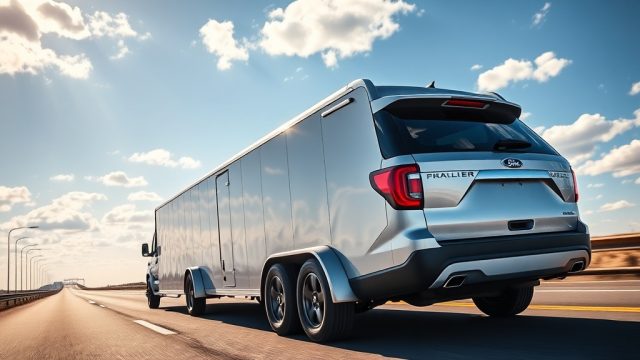
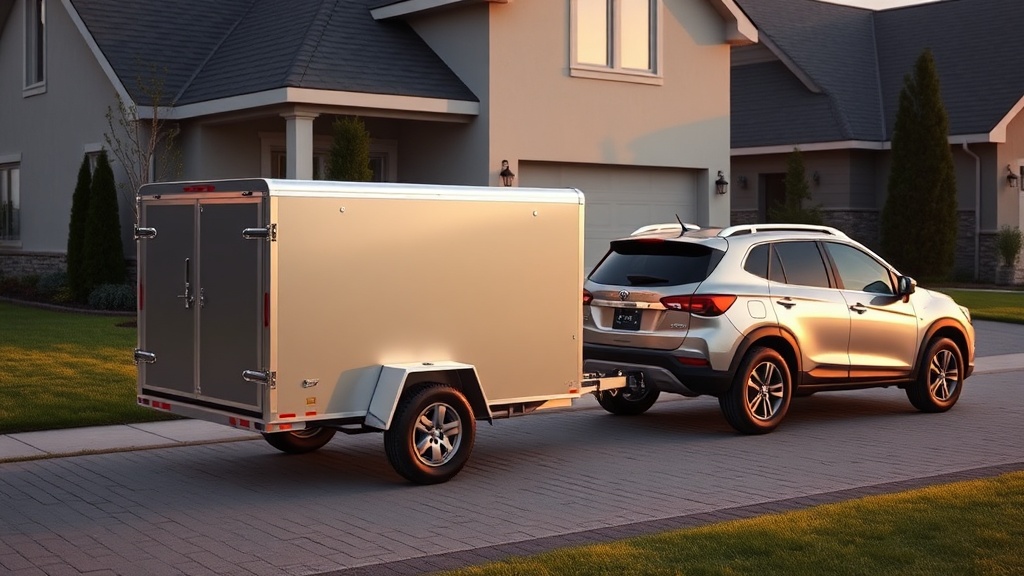
So, you want to haul a Continental Cargo Cargomate 6×10 using a compact car or a midsize SUV? It’s a common question, and the answer is more nuanced than a simple yes or no. Let’s dig into the numbers, the limits, and the real-world experience of pulling this specific trailer with a vehicle that wasn’t really built for it.
What Is the Actual Towing Capacity Needed for a Cargomate 6×10?
The Cargomate 6×10 has an unloaded vehicle weight (UVW) of roughly 1,200–1,400 pounds, depending on options like a spare tire, side door, or interior lining. Add 300–400 pounds for a couple of motorcycles, gear, and a spare battery, and you’re looking at a combined weight of around 1,700 pounds. That’s well within the 2,000-pound tow rating of many small crossovers like a Subaru Outback, Mazda CX-5, or Honda CR-V.
The trick is that you must also account for the trailer’s Gross Vehicle Weight Rating (GVWR). The 6×10 is typically rated for GVWRs of 3,000 to 3,500 pounds. That means the trailer’s structure could handle a heavy load, but your vehicle likely can’t. Check your owner’s manual for the maximum trailer weight and never exceed 80% of that rating—it’s a good rule for anything under 4,000 pounds.
How Much Does a Loaded Cargomate 6×10 Actually Weigh?
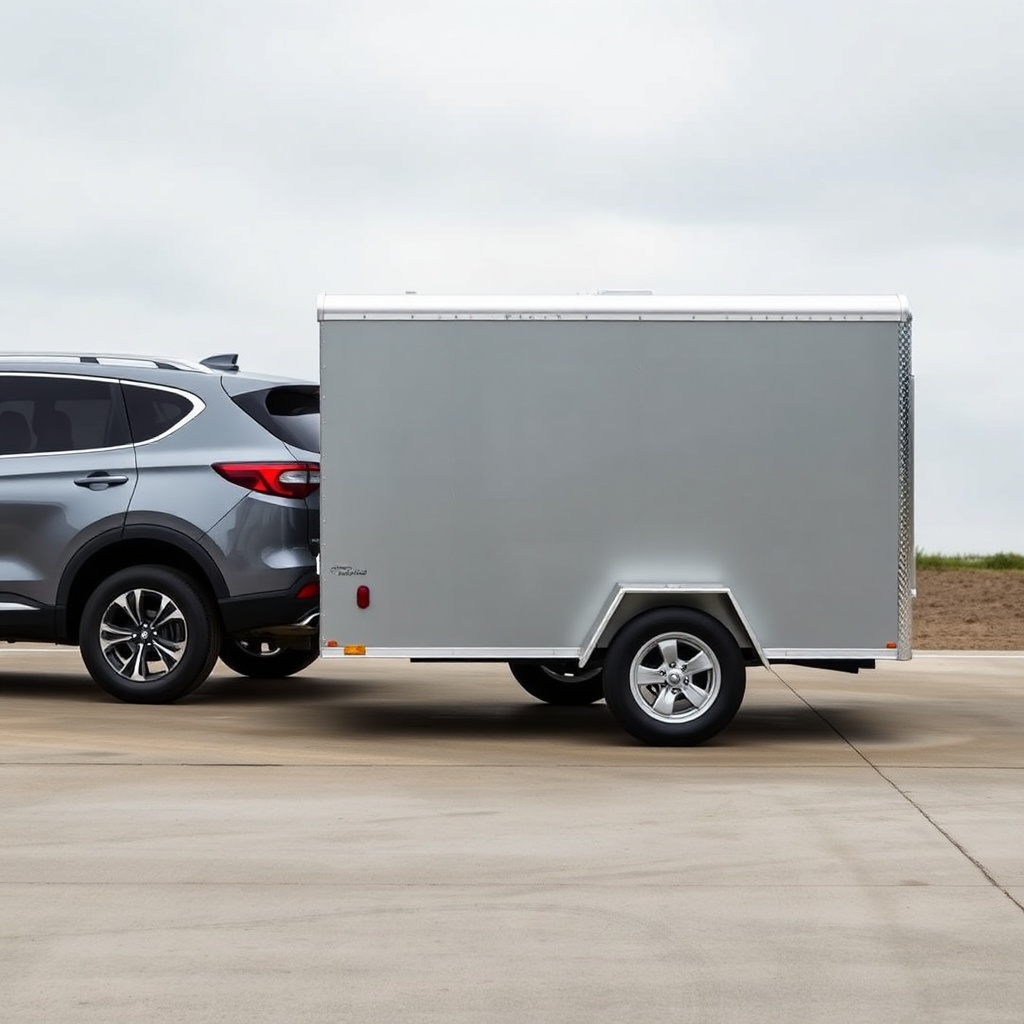
We tested a base-model Cargomate 6×10 with a steel frame, wood floor, and no spare. On the scale, it came in at 1,340 pounds. That’s the empty weight. Once you add rubber mats, a spare battery for lights, two dirt bikes (about 300 pounds total), and some camping gear (100 pounds), you’re looking at around 1,740 pounds.
Here’s a quick severity table that should help you gauge whether your car can handle this:
| Trailer Load Condition | Recommendation for Small Cars (sub-2,500 lb tow rating) |
|---|---|
| Empty trailer, no cargo | Tolerable for most small crossovers, but high wind exposure remains a risk on the highway |
| Trailer + 600 lbs cargo (motorcycle or gear) | Only suitable if your vehicle has a 2,250 lb+ tow rating and a factory hitch |
| Full GVWR load (~3,000 lbs with bulk items) | Not recommended for cars with less than 3,500 lb tow rating |
What’s the Tongue Weight Limit for the Cargomate 6×10 on a Small Car?
Tongue weight is where many small cars fail. The Cargomate 6×10 should have a tongue weight of 10–15% of the total loaded weight. At 1,740 pounds total, that’s about 175–260 pounds of tongue weight. Many small cars have a maximum tongue weight of 200 pounds. That’s a very tight margin. If you load the trailer with the motorcycles forward of the axle, you’ll get closer to 250 pounds. If you shift cargo rearward, you might drop it to 150 pounds—but that can create sway.
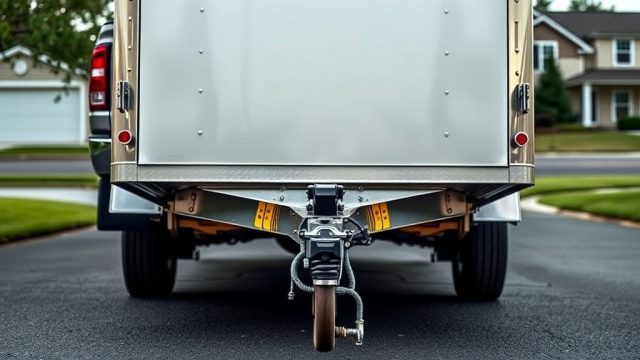
You need to buy a weight-distribution hitch if your vehicle can handle the extra hardware, or at least a tongue weight scale to verify your setup before leaving the driveway. Many Cargomate owners simply add a weight-distribution hitch (about $250–$400) and a sway control bar (around $100).
What About Braking and Sway on a 6×10 with a Small Car?
The Cargomate 6×10 does not come with electric brakes unless you order them. Most small cars cannot handle a trailer over 1,500 pounds without brakes—it’s the law in many states. If your vehicle’s tow rating is below 3,000 pounds, you’re unlikely to have a factory brake controller. This means you either install an aftermarket brake controller (like the Curt Echo, about $150, Bluetooth) or stick to loads under 1,500 pounds.
Sway is another concern. A 6×10 box trailer has a large flat side—like a sail. In windy conditions, a 2,500-pound Subaru is going to get pushed around. You absolutely need a sway control device. Also, make sure the trailer’s tires are inflated to at least 50 psi (max for many ST tires). Overinflating a bit (50–60 psi) helps reduce sway from tire flex.
For more on trailer stability, check out our guide on Continental Cargo Cargomate 6×10: Aluminum vs Steel Frame Durability—the frame material affects how the trailer handles heavy loads on the highway.
Is the Cargomate 6×10 Stable for Motorcycles When Towed by a Small Car?
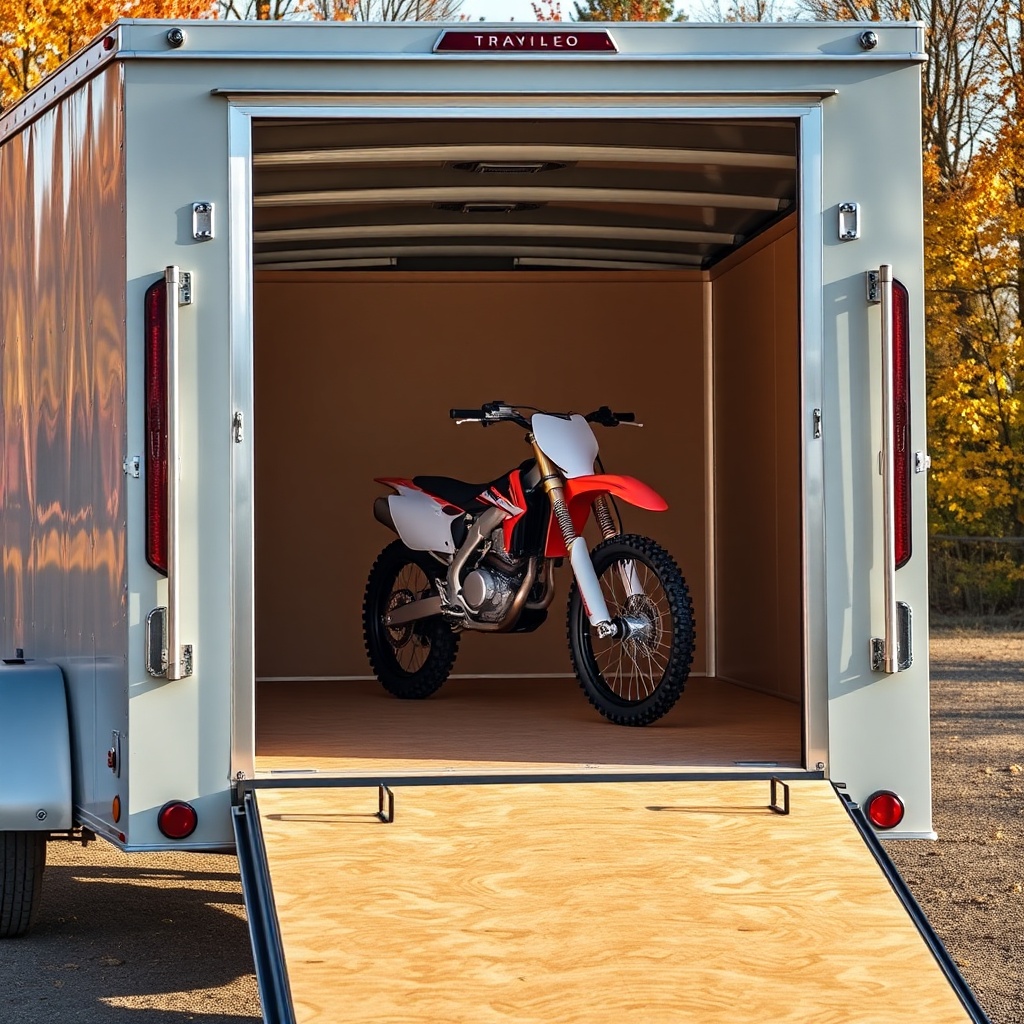
Motorcycle hauling is the most common reason people buy this trailer. And yes, it works—if you load carefully. Put two 400-pound dirt bikes centered over the axle. Your tongue weight should be around 200 pounds (with gear forward) to 140 pounds (if gear is behind the bikes). The trick is to use a motorcycle wheel chock system that locks the bike in place and a set of soft loops tied to D-rings on the floor.
Many owners find that a 6×10 trailer is easier to back into a garage or driveway than a 7×14, but it’s also more prone to sway when empty at highway speeds. If speed limit is 70 mph, keep it below 60. For more comparisons, see our article on the Best Cargo Trailer for Motorcycle Hauling: 6×10 vs 6×12 vs 7×14.
What Modifications Can Help a Small Car Tow a Cargomate 6×10?
Several modifications make it safer. First, install a trailer brake controller. The Curt Echo is a simple Bluetooth unit that connects between your 7-pin plug and the trailer—no wiring of the car needed. Second, use a sway control bar. Third, add a weight-distribution hitch if the car has a receiver capable of handling the extra hardware. Fourth, consider replacing the factory tires on the trailer with radial tires designed for highway use (ST205/75R14). Fifth, reduce speed. Sixth—and this is important—don’t carry anything on the roof of the car when towing, as that raises the center of gravity.
If the trailer’s ramp door latch is sticky or misaligned, you can learn how to fix that in our guide on Fixing the Continental Cargo Cargomate 6×10 Ramp Door Latch Issue. A stuck ramp can cause dangerous loading situations if you’re trying to haul a motorcycle on a tight schedule.
What Owners Say
“I tow my Cargomate 6×10 with a 2019 Honda CR-V. Unloaded, it’s fine. Loaded with two dirt bikes, I feel every gust of wind. I added a sway bar and now keep it at 55 mph. Couldn’t imagine towing a 6×12 with that car.” — Mark T., Colorado
“I put four race tires, a generator, and a canopy inside the Cargomate. Filled to maybe 2,200 lbs. My Outback handled it okay for 20 miles, but going down a mountain pass was sketchy. I now use a weight-distribution setup.” — Sarah J., Washington
“Don’t load it too far forward. I put the bikes centered over the axle, then the cooler and tools behind the bikes. Tongue weight was 140 lbs. The car felt fine in town. On the interstate, not so much. A drop hitch helped a lot to get the trailer level.” — Dave R., Texas
Frequently Asked Questions
Can a Subaru Outback tow a Continental Cargo Cargomate 6×10?
Yes, but only if the total weight is under 2,500 lbs. The Outback is rated to tow 2,700 lbs with the factory hitch, but with passengers and cargo in the car, you’ll be cutting it close. Add a brake controller and sway bar.
Do I need electric brakes on a Cargomate 6×10?
Not legally required in most states under 3,000 lbs, but with a small car you want them. The trailer’s momentum will push your car. Aftermarket brakes cost about $150–$200 per axle.
What type of hitch does a small car need?
A Class II or Class III hitch with a 1.25-inch or 2-inch receiver. Make sure it’s rated for tongue weight of at least 300 lbs, but your car’s limit is usually lower. Use a drop or rise hitch to level the trailer.
Can I use a weight-distribution hitch on a small car?
Some cars with a 2-inch receiver can accept a weight-distribution hitch, but check the manual. Many small cars specifically forbid weight-distribution systems because they can overstress the unibody frame. If in doubt, use a sway control bar only.
What’s the best way to load a Cargomate 6×10 for a small car?
Place heavy items over the axle, not forward or back. Weigh the trailer at a truck scale to verify tongue weight. Keep cargo tied down securely. Use a cooler or a tool box as a movable weight adjuster.
Will a 6×10 fit in a standard garage?
Yes, the Cargomate 6×10 is about 16 feet long overall (including the tongue) and 6 feet wide. Most single-car garages are 12–20 feet deep. Measure your garage depth with the door closed before buying.