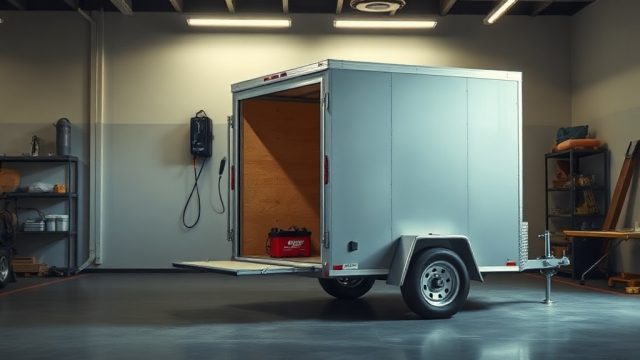
Continental Cargo Cargomate 6×10 Battery Maintenance and Charging Guide
Proper battery care is essential to keep your Continental Cargo Cargomate 6×10 trailer functional and reliable, particularly when running accessories like interior lights, winches, or brake controllers. This guide focuses on troubleshooting and upkeep, covering sealed lead-acid (SLA) and absorbed glass mat (AGM) batteries commonly installed in this model. Neglecting battery health can lead to sudden power loss, reduced lifespan, or damage to connected electronics, but with routine attention, you can avoid these pitfalls.
What type of battery does the Cargomate 6×10 use, and how do I identify it?
The Continental Cargo Cargomate 6×10 typically comes with a Group 24 or Group 27 deep-cycle battery, often a 12-volt AGM or SLA unit rated between 75 and 100 amp-hours (Ah). AGM batteries are popular because they are maintenance-free and resist vibration. Check the battery label for voltage, chemistry, and capacity—look for markings like “AGM” or “Maintenance-Free.” If the sticker is faded, the battery’s terminal configuration (left positive or right positive) can help confirm the group size. Consult your owner’s manual for original specs.
Always verify the battery type before purchasing a replacement or charger. Using the wrong charger chemistry (e.g., a standard lead-acid charger on an AGM battery) can overheat or damage cells. For help with integrating battery management with trailer systems, see our Continental Cargo Cargomate 6×10 Brake Controller Installation Guide for wiring best practices.
How often should I charge the battery, and what’s the correct charging voltage?
For sealed AGM or SLA batteries in the Cargomate 6×10, recharge as soon as the voltage drops below 12.4 volts (approximately 70% state of charge). A full charge requires 14.4 to 14.6 volts for AGM batteries, while standard lead-acid types often need 14.7 to 14.8 volts. Use a smart charger with automatic voltage regulation and a temperature sensor. Avoid overcharging above 15 volts, which can cause gassing or swelling. Monthly charging during storage is recommended, even if the trailer stays idle, to prevent sulfation.
If you notice the battery voltage dropping quickly under a light load, this may indicate sulfation, age, or a parasitic drain. Check all terminals and connections for corrosion—a common culprit. For more on managing trailer conditions that affect batteries, read Continental Cargo Cargomate 6×10 Roof Vent Condensation Prevention Tips.
What are common battery charging problems, and how do I troubleshoot them?
Several issues can arise with the Cargomate 6×10’s battery charging system. Below is a severity table for common problems:
| Issue | Symptoms | Severity | Likely Cause |
|---|---|---|---|
| Battery not charging | Voltage remains below 12.4V after 8 hours; charger stays in bulk mode | High | Corroded terminals, blown fuse, or dead cell |
| Charger overheating | Unit hot to touch, cycles on/off | Medium | Poor ventilation, wrong charger type, or internal fault |
| Slow charging (amp-hour rate lower than expected) | 6-amp charger delivers only 2-3 amps | Medium | Low grid voltage, long or thin extension cable, battery aged |
| Battery swollen or leaking | Case distortion, fluid smell or visible moisture | Critical | Overcharging or internal short (replace immediately) |
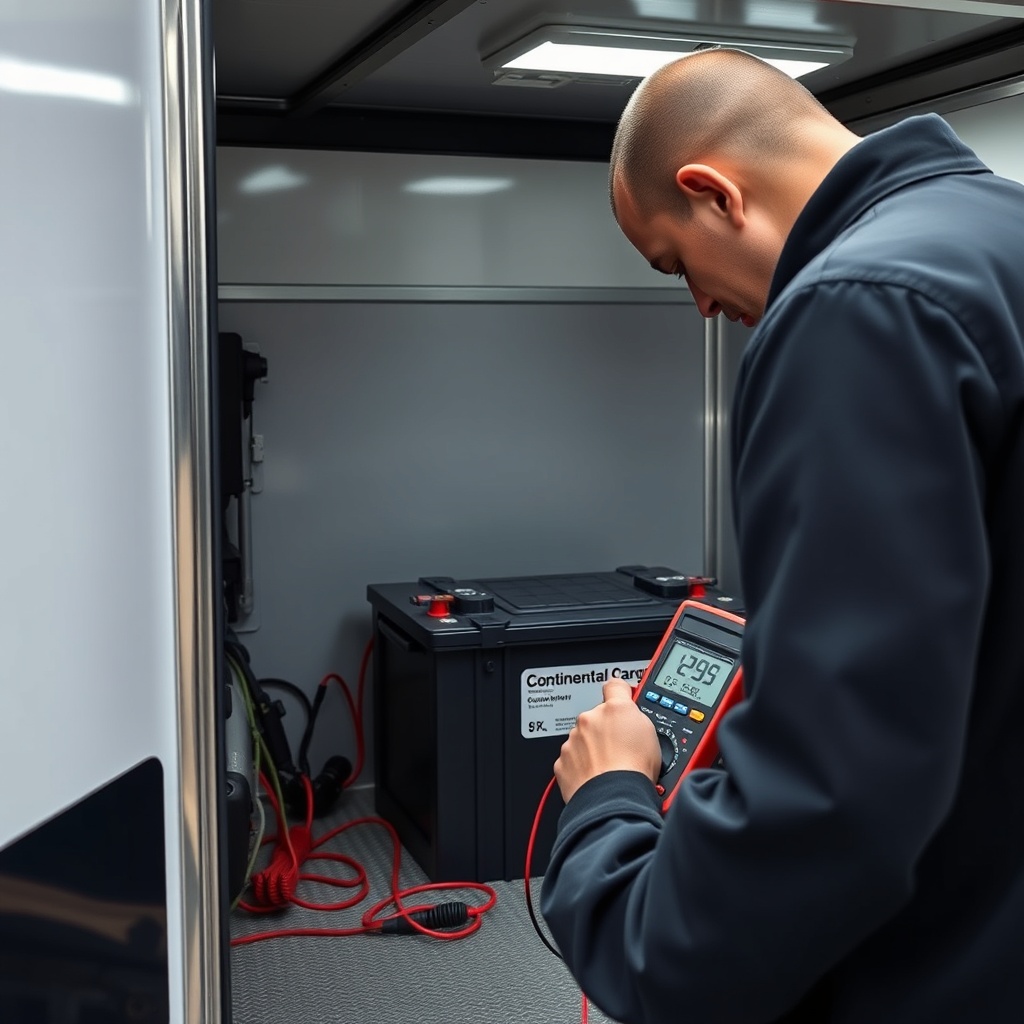
For troubleshooting, start by inspecting the charger’s output with a multimeter. Check the inline breaker or fuse near the battery box—a tripped 30-amp breaker is common. If the battery terminal connections are loose or corroded, clean them with a wire brush and dielectric grease. For deeper electrical diagnostics, the Continental Cargo Cargomate 6×10 Coupling Latch Inspection and Maintenance Guide offers steps for checking wiring at the trailer’s front junction box.
How should I store the battery during winter or extended idle periods?
When storing your Cargomate 6×10 for more than 30 days, remove the battery (or at least disconnect the negative terminal) and place it in a cool, dry location, ideally between 50°F and 60°F. Charge it fully before storage. Use a storage-maintenance charger (trickle-charger) set to 13.2-13.4V for float mode. Store batteries on a wooden shelf to avoid concrete-floor-induced discharge. Check voltage monthly—if it drops below 12.4V, recharge immediately. Allowing a battery to stay deeply discharged for weeks can reduce capacity permanently by 20-30%.
Moisture in the trailer battery compartment is a major risk—condensation can accelerate terminal corrosion and decrease battery lifespan. Our guide on Continental Cargo Cargomate 6×10 Rust Inspection and Prevention Guide provides compartment care tips that also protect your battery.
Can I upgrade to a larger battery, and what size fits the Cargomate 6×10 tray?
Yes, upgrading the battery capacity is possible if the existing Group 24 (up to 85Ah) isn’t enough for your needs. The Cargomate 6×10’s battery tray is typically designed to accommodate a Group 27 battery (up to 105Ah) or two Group 24 batteries if wired in parallel (for a total 170Ah). Before upgrading, measure the tray’s interior dimensions—standard width is around 6.5 inches for Group 24, Group 27 adds about 1.5 inches in length. Verify clearance for the compartment lid and hold-down brackets. Avoid exceeding 120Ah total with a single battery, as weight (around 60 pounds for Group 27) can stress the tray mounting bolts. For wiring a dual-battery setup safely, consult Continental Cargo Cargomate 6×10 Roof Load Capacity Analysis: What You Can Safely Carry for load distribution information.
What maintenance tasks should I perform monthly on the Cargomate 6×10 battery?
- Inspect terminals for corrosion—white or greenish deposits indicate acid leakage.
- Tighten cable connections to 10-12 ft-lb for copper lugs; overtightening may strip threads.
- Clean the battery case with a baking soda-water paste (1 tablespoon per cup of water) to neutralize acid film.
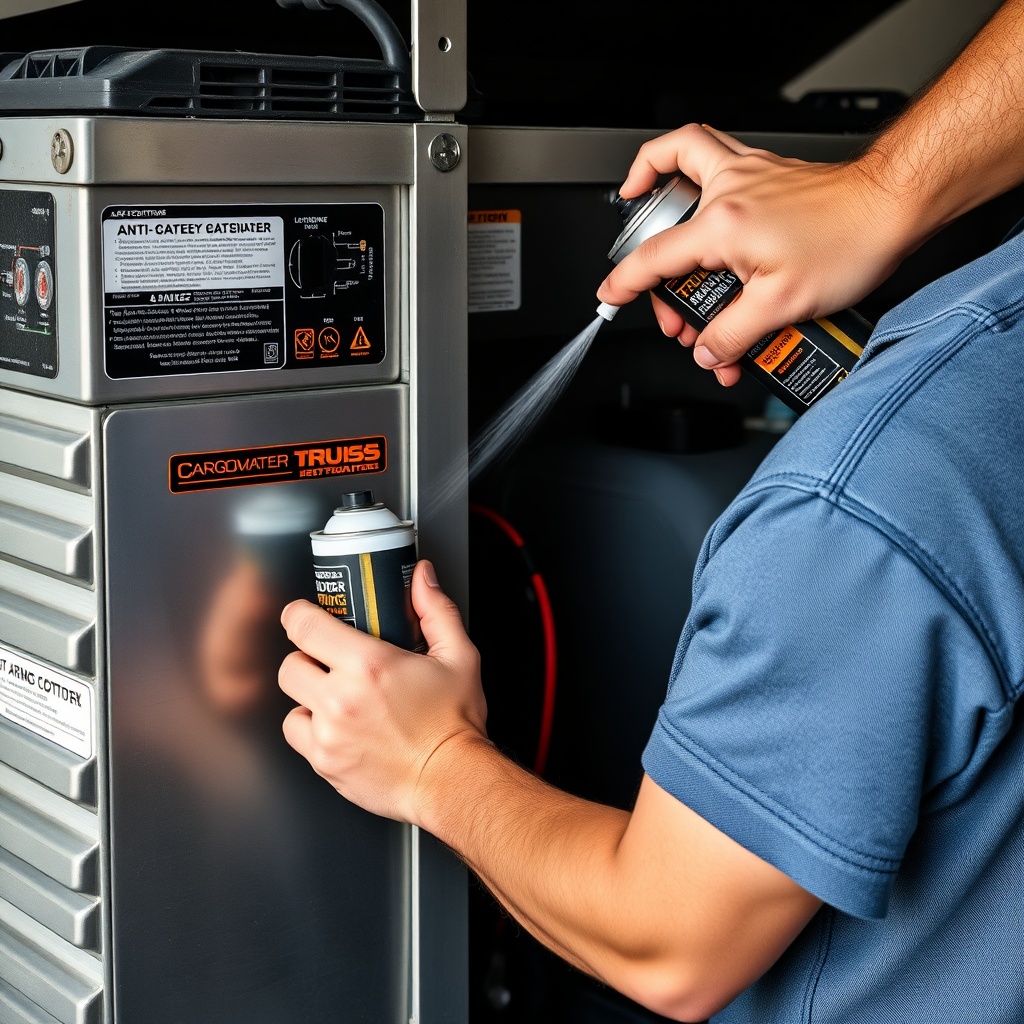
- Apply anti-corrosion spray or petroleum jelly after cleaning.
- Check electrolyte levels only on serviceable batteries (rare in AGM); for SLA, ensure plates are submerged with distilled water.
- Test voltage at rest after 6 hours: reading below 12.6V for a full charge signals aging.
What Owners Say
Cargomate 6×10 owners on forums and RV groups often praise the battery tray’s easy access but note that the stock battery terminal lugs can corrode quickly in humid climates. Many recommend swapping the included terminal hardware for marine-grade tin-plated copper. A frequent tip from owners with three-plus years of use is to replace the battery every 36-48 months, even if it appears functional, to avoid sudden failure during trips. Several owners also highlight that upgrading to a Group 27 AGM from brands like VMAX or Odyssey significantly improves daily use for internal lights and charging phones, without needing a generator. One owner reported wiring a $45 Renogy trickle charger with solar direct to the battery, extending his Cargomate’s off-grid time by a week. The main complaint is the lack of a battery disconnect switch—most owners add a $30 manual switch at the negative terminal to prevent parasitic drain from the refrigerator or wireless monitor systems.
Frequently Asked Questions
Q1: Can I use a standard car battery charger for my Cargomate 6×10 battery?
Yes, but only if it’s a smart charger with an AGM or deep-cycle setting. A standard auto charger may overcharge or undercharge, damaging the battery over time.
Q2: How long should a deep-cycle battery last in the Cargomate 6×10?
With proper care, expect 3-5 years. Regular monthly charging, clean terminals, and avoiding deep discharges below 50% state of charge improve lifespan.
Q3: My battery won’t hold a charge over 12V—what should I do?
Check for a parasitic drain by disconnecting the negative terminal and measuring current between the cable and battery post with a multimeter. A drain above 0.05 amps warrants locating the offender (e.g., a stuck relay or interior lamp).
Q4: Is it safe to install a second battery for more capacity?
Yes, if the tray can support two Group 24 batteries. Wire them in parallel with identical batteries of same age and type. Use a dual-battery isolator to prevent over-discharging.
Q5: Why does my charger show “fault” after an hour?
This usually indicates a bad cell or reversed polarity. Verify connections, then test the battery’s voltage—below 9 volts suggests a dead cell that requires replacement.
Q6: Can I charge the Cargomate 6×10 battery while towing?
Yes, if your tow vehicle has a seven-pin connector with a 12V auxiliary line (usually a 30-amp circuit). Ensure it’s fused and that the battery chemistry matches. For detailed wiring, our Continental Cargo Cargomate 6×10 Ramp Door Conversion: Step-by-Step Guide includes instructions for powering auxiliary systems.