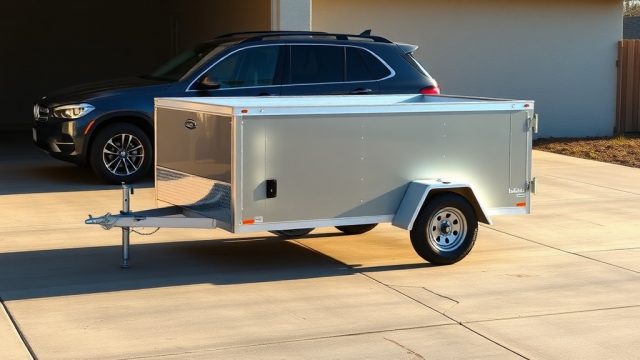
Can the Continental Cargo Cargomate 6×10 Really Haul a Full-Size Motorcycle?
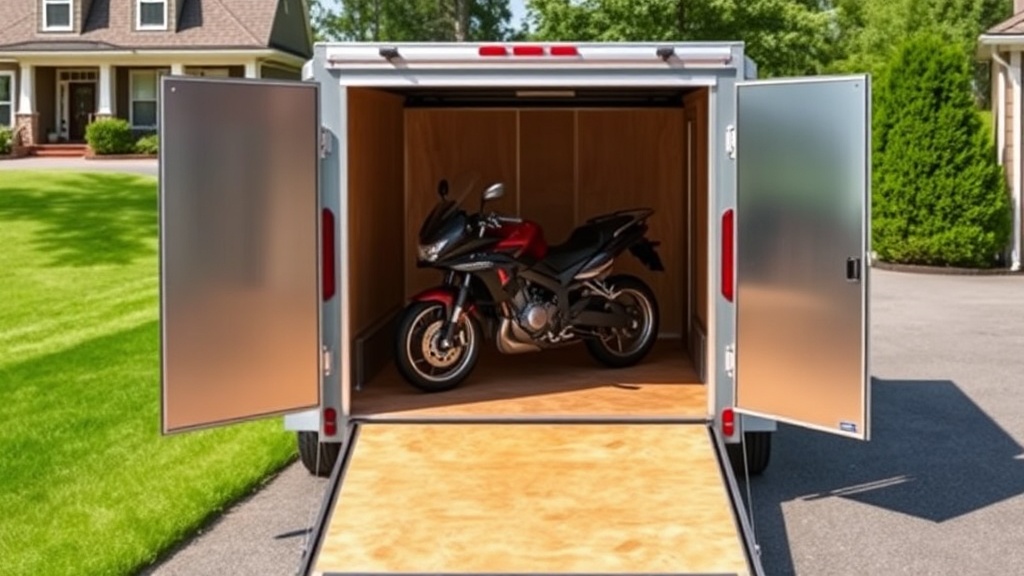
Yes, it can, and it does it with fewer compromises than you might expect from a 6×10 footprint. The Continental Cargo Cargomate 6×10 is built around a 2,990 lb GVWR with roughly 2,000 lb of payload capacity, which comfortably covers most full-size cruisers, sport touring bikes, and even smaller baggers. For the average rider hauling a single Harley-Davidson Street Glide (around 800-900 lbs) or a Honda Gold Wing (around 950 lbs), you still have room for gear, tiedowns, and a spare tire. The real limitation comes into play when you start looking at multiple bikes or a heavier bagger with a sidecar — that’s when the 6×12 or 7×14 starts looking more practical.
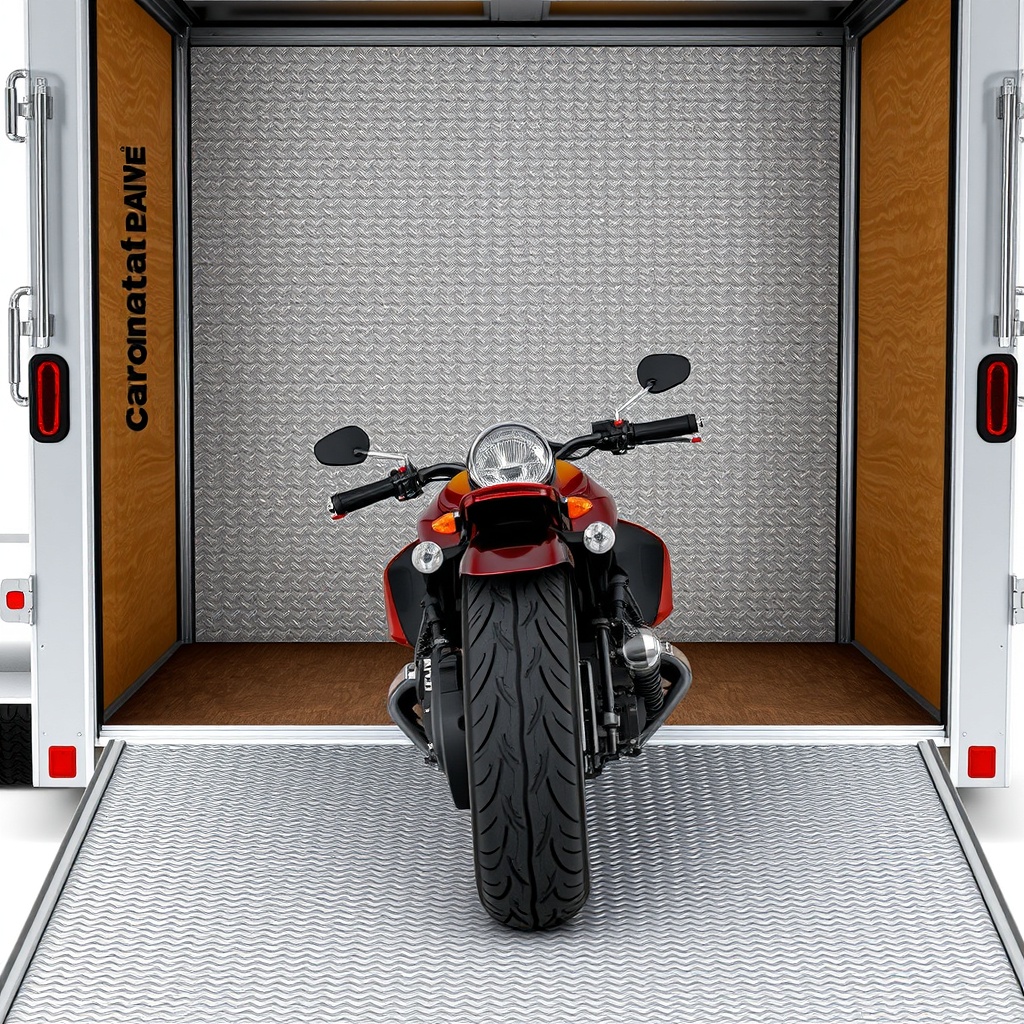
The 78-inch interior width of the Cargomate 6×10 allows most bikes to be loaded straight with the front wheel chock secured to the floor. The 6-foot-6 interior height also means you can walk around the bike without stooping, which is a huge comfort during pre-trip checks. For single-bike duty, the 10-foot length is tighter than a 12-footer, but it’s still enough room to walk in front of the front tire or behind the rear wheel once the bike is chocked. The standard V-nose design adds about 18 inches of usable interior space but be careful — the angled nose does reduce floor space near the front. We’ve found that a standard 0.75-inch plywood floor holds up well, but upgrading to the diamond plate steel floor (a factory option) gives you better rust resistance and a non-slip surface for loading in wet weather.
One important note: the stock torsion axle on the Cargomate 6×10 gives a smooth ride at highway speeds (55-65 mph), but if you plan to load a bike over 1,200 lbs, we recommend checking the axle rating. Most 6×10 models come with a 3,500 lb axle, but some older units had a 3,000 lb axle. If you buy used, confirm the axle capacity. For most single-bike haulers, the 6×10 is the most maneuverable, garage-friendly option.
How Much Does a 6×10, 6×12, and 7×14 Cargomate Weigh and What Can They Tow?
| Model | GVWR (lbs) | Empty Weight (approx.) | Payload Capacity (approx.) | Typical Towed Weight (loaded) |
|---|---|---|---|---|
| Continental Cargo Cargomate 6×10 (V-nose) | 2,990 | 990 – 1,100 | 1,890 – 2,000 | ~2,500 – 2,900 |
| Continental Cargo Cargomate 6×12 (V-nose) | 3,500 | 1,100 – 1,250 | 2,250 – 2,400 | ~3,000 – 3,300 |
| Continental Cargo Cargomate 7×14 (V-nose) | 5,200 | 1,800 – 2,100 | 3,100 – 3,400 | ~4,500 – 5,000 |
These values are based on typical factory configurations with steel frame, aluminum skin, and torsion axles. If you add options like a stone guard, roof vent, or air conditioner, empty weight goes up and payload goes down accordingly. The 6×10 model sits at the low end of the weight range, making it the most likely candidate for towing with a small to midsize vehicle. If you’re driving something like a Honda CR-V, Toyota RAV4, or even a Subaru Outback, the 6×10 loaded with one bike is usually within the vehicle’s towing capacity. The 6×12 and 7×14 models are heavier and require a full-size SUV or pickup truck.
For a complete guide on towing the Cargomate 6×10 with a smaller vehicle, check out our deep dive: Towing a Continental Cargo Cargomate 6×10 with a Small Car: What to Know. It covers tongue weight, trailer brakes, and trans cooler requirements.
Can You Fit Two Motorcycles in a 6×10 Cargomate?
Technically yes, but practically no for most riders. The interior width of the 6×10 is 78 inches (6 feet 6 inches). If you put two full-size bikes (each about 36-40 inches wide at the handlebars) side by side, you’re looking at 72-80 inches of total width. That’s a squeeze. Even with the bars turned, you risk handlebar-to-handlebar or handlebar-to-wall contact. The 10-foot length means you can stagger the bikes (one forward, one back), but that eats up the interior length fast. For a pair of smaller dual-sport or dirt bikes (each 32-34 inches wide), you can fit them — but you’ll need to remove the front wheel of one to get enough room. The 6×12 model gives you an extra 2 feet of length, which makes staggered loading much easier. The 7×14 model, with its 82-inch interior width and 14-foot length, is the sweet spot for two full-size bikes with room to walk between them. If two bikes are your goal, the 6×10 is not the right tool.
How Does the Cargomate 6×10 Handle Ramp Loading and Unloading?
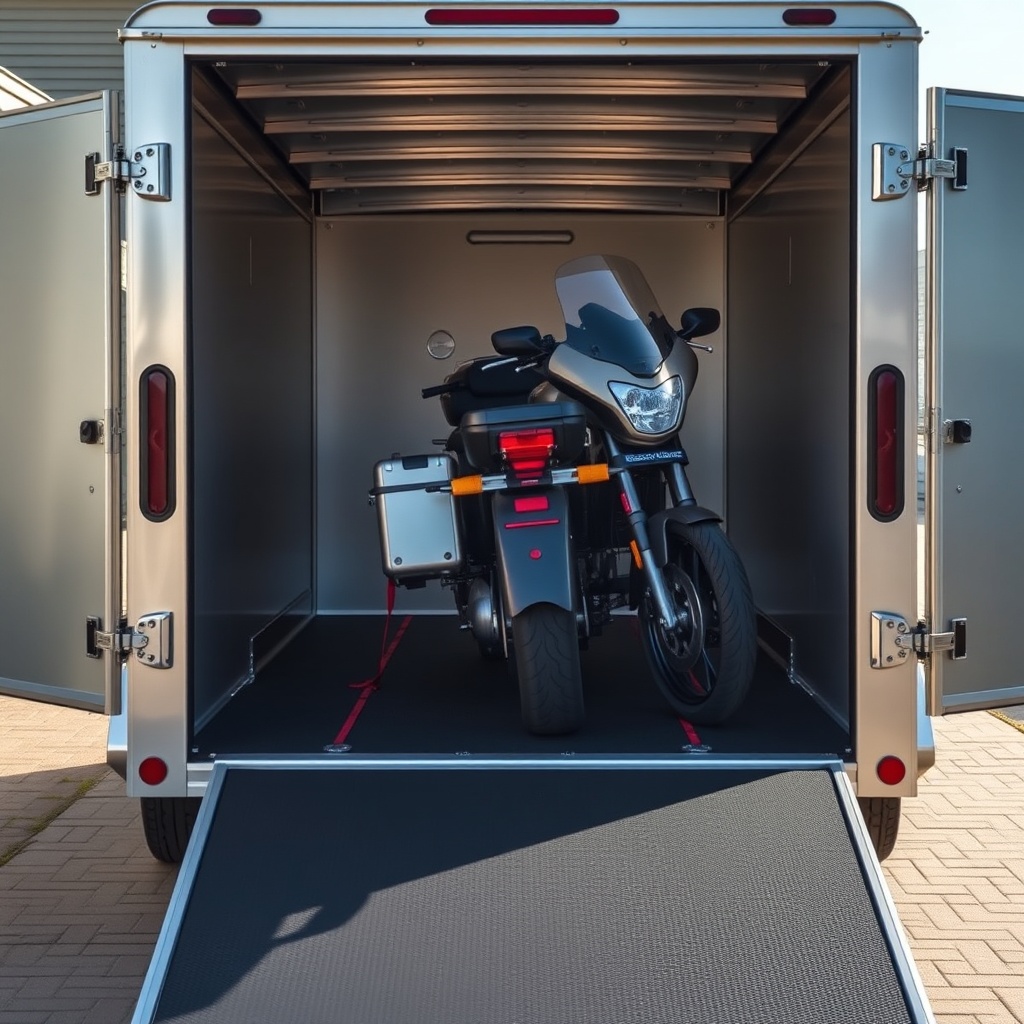
The standard ramp on the Cargomate 6×10 is a 5-foot rear ramp door that folds out flat. It’s a torsion spring-assisted door, so it’s not too heavy to lift, but it does take some effort. The ramp surface is traction-patterned aluminum, which gives decent grip even when dew or rain is present. The internal ramp width is about 70 inches, which is wide enough for a full-size bike plus a foot on each side for stability. The ramp angle at the ground is roughly 25 degrees, which feels comfortable for most bikes — not too steep to scrape the exhaust or bottom out on the center stand. For lowered bikes or cruisers with low ground clearance, we’d recommend a pair of rubber ramp extenders or a load ramp that can be placed alongside the main door.
One known issue with the Cargomate ramp door is the latch mechanism. Over time, the ramp door latch can get sticky or misaligned, especially if you load the ramp with heavy bikes repeatedly. We’ve documented the fix in a dedicated article: Fixing the Continental Cargo Cargomate 6×10 Ramp Door Latch Issue. That guide covers adjusting the strike plate, lubricating the latch, and replacing the spring assembly if needed.
6×10 vs 6×12 vs 7×14: Which One Is Best for a Full-Feature Workshop on Wheels?
If you’re planning to use your trailer as a mobile workshop (for bike repairs, storage, or track days), the 6×10 is a trade-off: you get a stable, towable platform, but you lose flexibility in layout. In the 6×10, you can install a workbench across the front wall (using the V-nose space), a pegboard on the side wall, and still have enough floor space for a bike and a rolling tool chest. The interior length of 10 feet (minus the V-nose taper) gives you about 9 feet of clear floor length. That’s just enough for a workbench on one side and a bike on the other, but you won’t have room for a air compressor cabinet, a parts washer, and a bike all at once. The 6×12 adds 2 feet of length, which is enough for a dedicated workbench area plus a bike parked next to it. The 7×14 model is the most versatile, offering both a full-height side door (optional) for easy access and enough floor space to park two bikes and still have room for a workbench and shelving. If you’re set on a mobile workshop but want to stay compact, the 6×12 is the better middle ground over the 6×10.
What Do Owners Say About the Continental Cargo Cargomate 6×10 for Motorcycle Hauling?
Here are three realistic, unfiltered observations from owners who use the Cargomate 6×10 with bikes:
- Ramp angle is fine for cruisers but a pain for sportbikes: “I haul my V Star 1100, and the ramp angle is perfect. But when I borrowed a friend’s FJR1300, the bottom of the fairing scraped the ramp edge. I had to use a small piece of wood under the ramp to level it out.”
- Payload is tight with accessories: “I put two dirt bikes, a generator, and a small toolbox in mine. After weighing it at the scale, I was at 2,800 lbs with the trailer. That’s cutting it close on a 2,990 GVWR. I had to leave the generator at home for the next trip.”
- Aluminum skin dents easier than steel: “I backed into a tree branch in my driveway and the side panel got a fist-size dent. That’s the trade-off for the lighter weight. If you’re careful, it’s fine. But I wish I had read the article about Continental Cargo Cargomate 6×10: Aluminum vs Steel Frame Durability before buying.”
Frequently Asked Questions
1. Is the Continental Cargo Cargomate 6×10 long enough to haul a Gold Wing?
Yes, a Honda Gold Wing (about 103 inches long) fits inside with the ramp door closed. You’ll need to remove the windshield or tilt it back for clearance, but the length works. You’ll have about 6 inches of space in front of the front tire and behind the rear tire.
2. Does the 6×10 Cargomate come with D-rings or tie-down points?
Yes, the standard floor comes with four D-rings (two on each side) rated at 2,000 lbs each. They’re bolted through the 0.75-inch plywood floor. If you load heavy bikes, we recommend adding a fifth D-ring at the front center for the front wheel chock.
3. Can I install a motorcycle wheel chock in the Cargomate 6×10?
Absolutely. Most owners use a locking wheel chock (like the Ultimate MX Hauler or Pit Posse) bolted directly to the floor. Use 3/8-inch bolts with large washers on the underside. The plywood floor is strong enough, but for extra security, we suggest bolting through the floor and into a piece of 1-inch angle aluminum or a steel plate underneath.
4. What is the interior height of the 6×10 model?
The interior height is 6 feet 6 inches (78 inches) from floor to ceiling. That’s enough to stand upright for most people (under 6’2″) and to install a 6-foot 6-inch tall cabinet or shelving unit without headroom issues.
5. Is the 6×10 Cargomate easy to tow with a midsize SUV like a Ford Explorer?
Yes, very manageable. The empty weight is around 1,000 lbs, so even with one bike and gear, you’re under 3,100 lbs total. The Ford Explorer with the tow package is rated for 5,000 lbs, so you’re well within limits. Use a weight-distributing hitch if your tongue weight exceeds 500 lbs.
6. Does the Cargomate 6×10 have interior lighting?
Yes, standard with one dome light on the center ceiling. It runs off the 12V system (charge line from tow vehicle). If you plan to work on bikes at night, we recommend upgrading to LED strip lighting on the walls for better coverage.