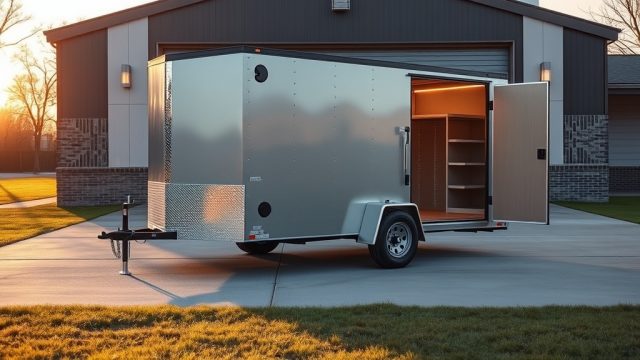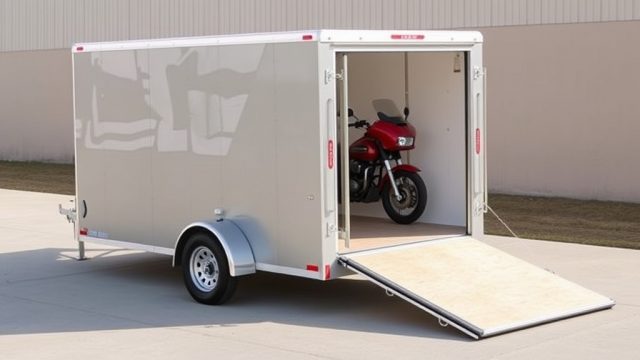
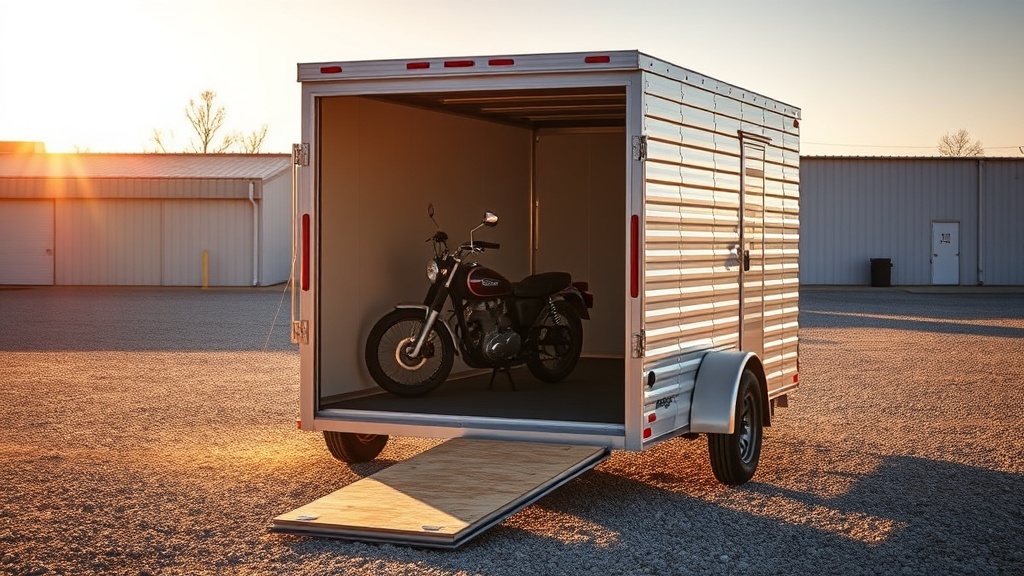
Why Choose the Pennsylvania Cargo 6×12 for Motorcycle Transport?
When you need to move a bike across state lines or simply store it between rides, the 6×12 footprint strikes a rare balance between maneuverability and interior volume. The Pennsylvania Cargo 6×12 measures 72 square feet of floor space with a 6’3″ interior height, enough to swallow a full-sized touring bike like a Harley Road Glide or a sportbike with room for gear. The 3,500-pound gross vehicle weight rating (GVWR) means you can load a 900-pound bike plus 600 pounds of equipment without exceeding safe limits, a critical calculation that many owners overlook. This model’s interior customization potential leans heavily on its standard V-nose, which adds roughly 2 feet of usable storage at the front—perfect for helmets, stands, and toolboxes.
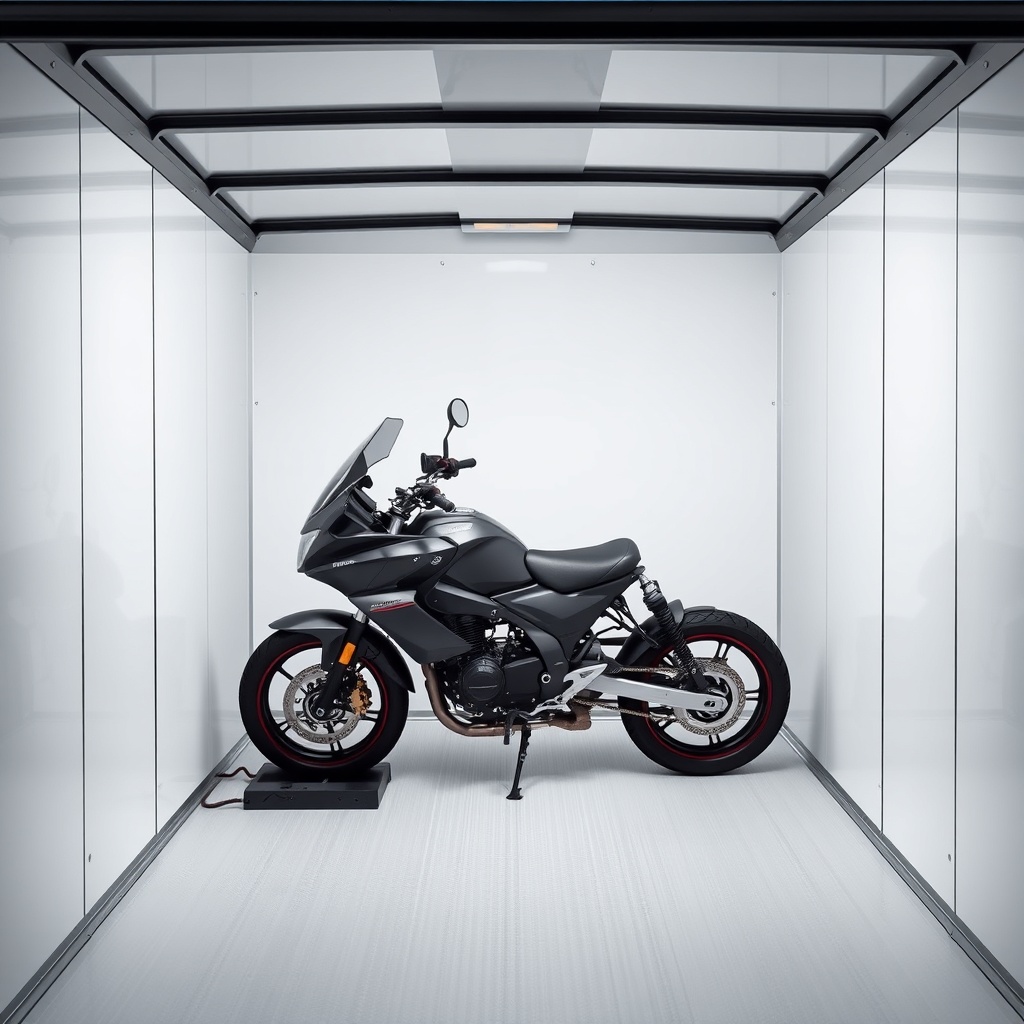
How Should You Lay Out the Interior for a Single Motorcycle?
The most common approach for single-bike hauling starts with a wheel chock bolted directly to the plywood floor (3/4-inch, treated). Place the chock 24 to 30 inches from the front wall to allow the front wheel to nestle while leaving the rear wheel centered on the axle for balanced weight distribution. Owners typically install a 2-foot-deep shelf along the left or right wall to hold a tire pump, oil cans, and spare parts. Consider a built-in cabinet in the V-nose area—at a cost of $150–$300 for materials and labor—that provides lockable storage for registration and tools. A popular addition is a heavy-duty e-track system along the walls, priced at $80–$120 per pair, which lets you move tiedown anchors as needed. Because the frame welds are rated for continuous vibration loads (read the Pennsylvania Cargo 6×12 Frame Welding Review), you can secure tie-downs directly to the frame rails without worry.
What Storage Solution Works Best for Multiple Bikes?
Fitting two motorcycles inside a 6×12 requires careful dimensioning. The interior width is 6 feet (72 inches), and a typical handlebar span is 32–36 inches per bike. With the bikes staggered—one front wheel slightly ahead of the other—you gain the needed clearance. Install a removable center divider made from 2×4 lumber and 1/2-inch plywood, which prevents bike-to-bike contact during turns. For storage, use the space between the two front wheels: mount a 12-inch-deep shelf across the V-nose area to hold small items. A floor-mounted toolbox at the tailgate end, roughly 18×24 inches, can hold tie-down straps and wheel chocks when not in use. Total cost for a two-bike setup, including chocks, divider, and shelf, ranges from $250 to $400.
| Component | Single Bike Setup | Two-Bike Setup |
|---|---|---|
| Wheel chocks (pair) | $45–$90 | $90–$160 |
| E-track (4-foot section) | $35–$50 per pair | $70–$100 (two pairs) |
| Removable center divider | Not needed | $40–$60 materials |
| V-nose cabinet kit | $150–$300 | $200–$350 (larger) |
| Total estimated cost (DIY install) | $200–$440 | $400–$670 |
How Do You Secure Gear Without Wasting Floor Space?
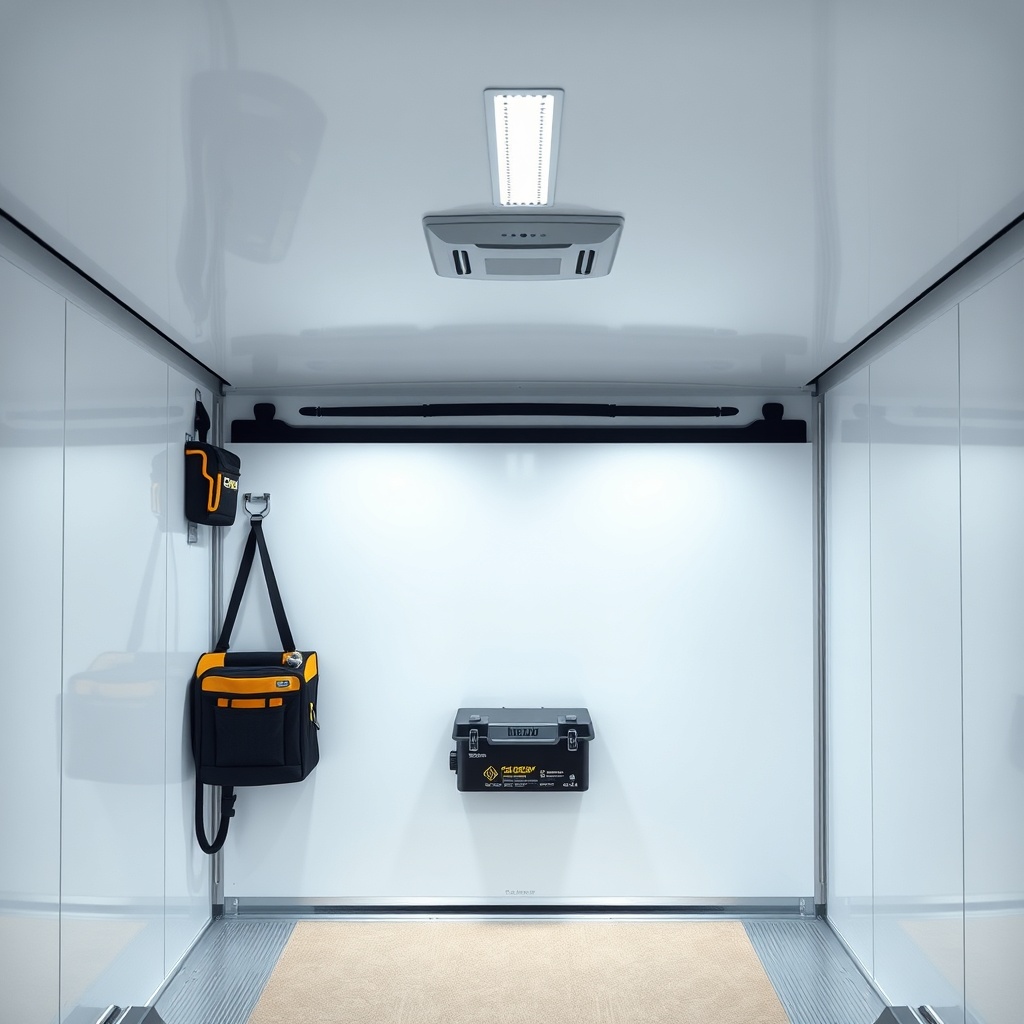
Floor space is premium in a 6×12, so vertical storage is the answer. Install a heavy-duty mesh shelf along the upper walls (around 72 inches from the floor) to hold lightweight items like raingear, sleeping bags, or tool rolls. Use heavy-duty stainless steel hooks on the ceiling V-nose area to hang a spare tire or a folding ramp. A compact 10×10-inch wall-mounted tool pouch near the door keeps wrenches and screwdrivers accessible without taking up floor area. For larger items—like a 5-gallon fuel jug—use a floor-mounted bracket strapped to the frame with a ratchet strap, never stored loose. The Pennsylvania Cargo 6×12 frame welding review notes that the crossmembers are gusseted, meaning you can bolt racks or shelves to the side walls without risking structural fatigue.
What About Power and Lighting for Night Loading?
If you frequently load or unload after dark, add an interior LED dome light wired to the trailer’s existing 12V system. A single 12-inch LED strip (consuming only 0.5 amps) mounted high on the ceiling illuminates the full interior for about $25. For tool power, install a battery isolation box with a deep-cycle marine battery (around $120) plus a 300W inverter to run a impact driver or drop light. For maximum utility, add a power distribution panel ($35) with two USB ports and a 110V outlet, keeping wiring hidden behind a removable plywood panel on the front wall. The Pennsylvania Cargo 6×12 comes pre-wired for standard taillights, so extending the 12V circuit into the trailer is a weekend project.
What Owners Say About Their Pennsylvania Cargo 6×12 Motorcycle Setup
Owners consistently praise the 6×12’s paint quality and fiberglass roof for resisting scratches during loading. One rider from Ohio reports: “I put two sportbikes inside with staggered chocks and still have room for a pit stand, cooler, and toolbox—the V-nose makes all the difference.” Another owner notes, “The 3,500-pound GVWR means I can load my 800-pound bagger plus 200 pounds of gear without hitting the limit, and the tie-down points on the frame rails hold firm.” Complaints center on the factory floor being untreated; owners recommend sealing it with marine-grade paint ($40 per quart) immediately. Several owners also mention that the torsion axle produces a smoother ride than leaf springs, reducing jolts to the bikes during transit.
Frequently Asked Questions
1. How much interior height does the Pennsylvania Cargo 6×12 have?
Standard interior height is 6 feet 3 inches (76 inches), measured from floor to ceiling at the center. The V-nose area drops to roughly 5 feet 8 inches at the front wall, which limits large items standing upright there.
2. Can I install a full-height workbench in the V-nose?
Yes, but the sloping roof limits depth. A workbench 18 inches deep and 30 inches wide fits comfortably. Use the remaining V-nose space for wall-mounted shelves.
3. What is the maximum weight for a single motorcycle in this trailer?
With a 3,500-pound GVWR and the trailer itself weighing around 1,200 pounds, you have 2,300 pounds of payload capacity. Most single motorcycles (900–1,100 pounds) are well within this limit, but heavy touring bikes plus gear can approach 1,800 pounds.
4. Do I need special tiedowns for the Pennsylvania Cargo 6×12?
Standard ratchet straps are fine, but use soft-loop straps to avoid scratching the bike’s handlebars. The factory frame rails have Weld-in crossmember locations for mounting D-rings (as detailed in the frame welding review).
5. How long does a typical interior customization take?
A single-bike setup with wheel chock and basic storage takes 4–6 hours for a DIY owner. Adding two-bike configuration with a power system extends the timeline to 10–14 hours over a weekend.
6. Should I add insulation to the interior walls?
Only if you plan to use the trailer for overnight stays. For motorcycle hauling, the factory aluminum siding and fiberglass roof provide sufficient temperature control. Insulation adds $100–$150 in material and reduces usable width by about 2 inches per side.