What Is the Real-World Towing Experience with the Haulmark Edge 6×12 Using a Mid-Size SUV?
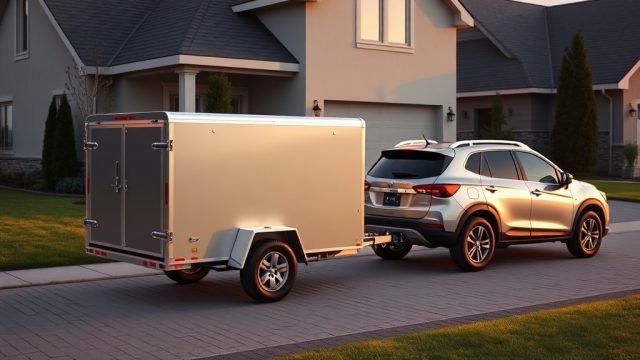
Towing a fully-loaded 6×12 cargo trailer like the Haulmark Edge with a mid-size SUV (think Ford Explorer, Jeep Grand Cherokee, Toyota 4Runner) requires careful matching of tow ratings, tongue weight, and trailer geometry. The Edge 6×12’s dry weight of approximately 1,900 lbs and a GVWR of 7,000 lbs means you’re often running near the upper limits of a mid-size SUV’s 5,000–7,200 lb tow capacity. This article breaks down stability factors, weight distribution setup, and practical tips to keep your rig predictable on the highway.
How Much Tongue Weight Does a Haulmark Edge 6×12 Typically Have, and Why Does It Matter for a Mid-Size SUV?
Tongue weight is the downward force the trailer coupler exerts on the hitch ball. For a loaded Haulmark Edge 6×12, expect tongue weight between 600 and 800 lbs when the trailer is loaded to 50–70% of GVWR (e.g., 3,500–4,900 lbs total). A mid-size SUV’s receiver hitch is usually rated for 500–750 lbs tongue weight, so you must measure and adjust load distribution accordingly.
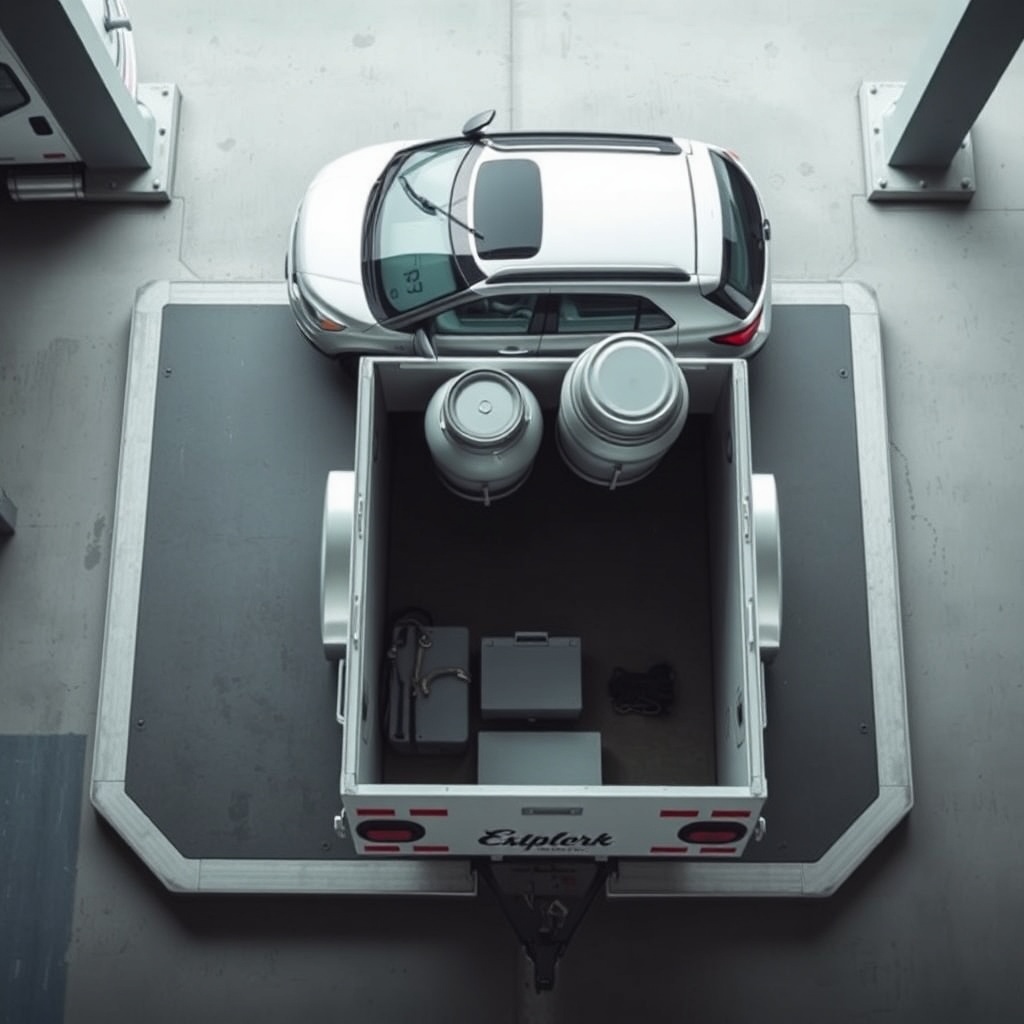
Excessive tongue weight over 750 lbs can overload the rear axle and reduce front-axle steering grip. Insufficient tongue weight (below 10% of loaded trailer weight) can cause sway. Use a tongue weight scale (like the Sherline model) to verify your setup. Distribute heavy items—like a motorcycle, generator, or gear—so that roughly 60% is over the trailer’s axles, not piled at the very front or back.
Will a Mid-Size SUV Need a Weight-Distribution Hitch with the Haulmark Edge 6×12?
Yes, for most mid-size SUVs towing a Haulmark Edge 6×12 loaded to 4,000 lbs or more, a weight-distribution hitch (WDH) is strongly recommended. Models like the Fastway E2 or Equal-i-zer 600/6000 shank have built-in sway control. The Edge 6×12’s steel frame (see Haulmark Edge 6×12 Frame Welding Review: Strength and Durability) is stiff enough to accept the spring bars without flexing, but you must confirm the trailer’s A-frame is rated for a WDH—most cargo trailers are, but the hitch point height should be measured precisely.
A WDH redistributes about 20–30% of tongue weight back to the front axle of the SUV, keeping headlights aimed correctly and improving steering feel. Without it, you may notice a “bucking” motion over bumps and reduced braking stability.
What Tire Pressures and Inflating Tips Are Critical for the Haulmark Edge 6×12 and Tow Vehicle?
Start with the tow vehicle’s tires: inflate them to the maximum pressure listed on the sidewall (often 44 psi for P-metric tires, or 50–80 psi for LT tires). Under-inflated rear tires generate excessive heat and sidewall flex when towing. The Haulmark Edge 6×12 uses ST205/75R15 tires—inflate them to 50 psi (cold) per manufacturer spec. Check both trailer and SUV tire pressures before every trip, as temperature changes can drop pressure by 2–3 psi.
Also verify the spare tire on the Haulmark—it’s mounted under the rear frame, and its valve stem can be difficult to reach. Consider a TPMS (Tire Pressure Monitoring System) for the trailer: Bluetooth sensors that screw onto each valve stem can alert you to a slow leak or heat build-up. This is especially important if you regularly tow near the GVWR.
How Should You Load a Haulmark Edge 6×12 Inside to Maximize Tow Stability?
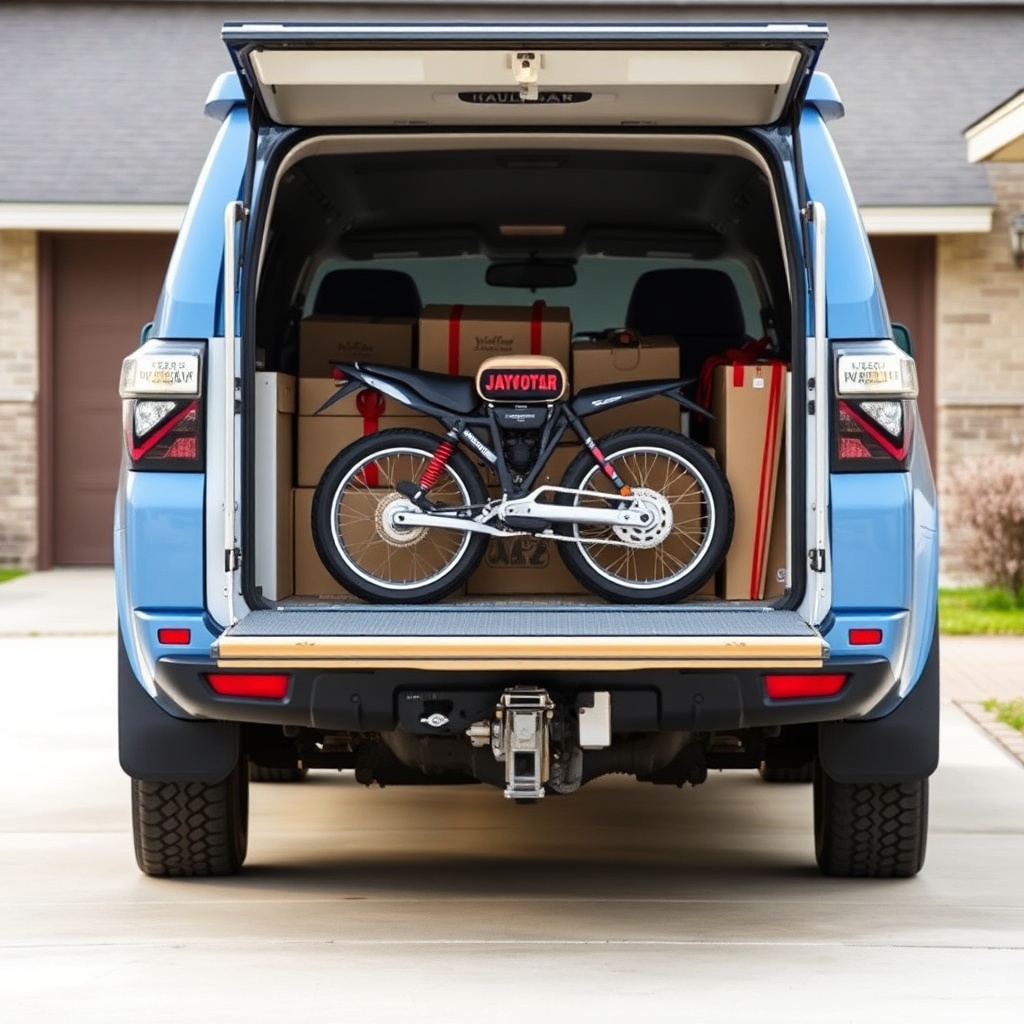
Loading is the single most impactful variable for safe towing. Follow the “60/40 rule”: 60% of the cargo weight should be in the front half of the trailer (between the tongue and the axle), 40% in the rear. For a 6×12, the axles are centered roughly at the 6-foot mark from the front wall. Use tie-down anchors—there are eight D-rings on the floor and four on the walls—to secure heavy items like a motorcycle, ATV, or tool boxes.
If you’re hauling loose gear, consider Best Interior Customizations for the Haulmark Edge 6×12 Cargo Trailer, such as E-track systems or a front-mounted storage cabinet, to keep weight distribution consistent. Never exceed the GVWR of 7,000 lbs, and remember that water weight if you install a tank: 1 gallon = 8.34 lbs.
A common mistake is loading the tail heavy—this reduces tongue weight below 10% and causes dangerous sway. If you must place a heavy item near the rear, move it forward after loading and measure tongue weight again.
What Are the Most Important Hitch Receiver and Ball Specifications for the Haulmark Edge 6×12?
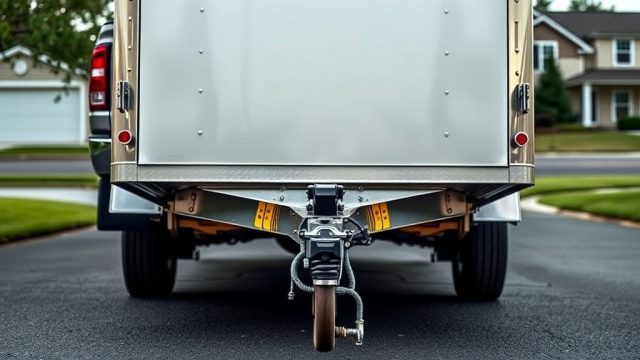
Use a 2-inch receiver on your SUV (2.5-inch receivers are rare on mid-sizers). The Haulmark Edge 6×12 uses a 2-5/16-inch ball—common for 7,000–10,000 lb trailers. Never use a 2-inch ball; it will not engage the coupler properly. Select a ball rated for at least 7,000 lbs gross trailer weight (Class IV or V). The required shank length depends on your SUV’s hitch tube—most need a 6-inch drop with a 1/2-inch rise if the trailer sits level.
To measure: park the SUV on level ground with the trailer attached and loaded. The trailer’s tongue should be parallel to the ground (within 1 inch of level). If the rear sags, you need either a drop/rise shank adjustment or a weight-distribution hitch. Verify the coupler on the Haulmark Edge 6×12 is in good condition—latch spring tension should snap the ball in with a distinct click.
How Does the Haulmark Edge 6×12 Compare to Competing 6×12 Trailers for Mid-Size SUV Towing?
We compared the Haulmark Edge 6×12 to the PJ Pacesetter 7×14 in a dedicated review (Haulmark Edge 6×12 vs. PJ Pacesetter 7×14: Which Cargo Trailer Wins?). For SUV towing, the Edge 6×12’s lighter dry weight and lower aerodynamic drag (narrower width at 6ft vs 7ft) make it easier to pull with a 5,000 lb tow rating. The PJ Pacesetter 7×14 has a GVWR of 9,900 lbs and requires a heavier tow vehicle, often a 3/4-ton truck. The Edge 6×12 also features a tapered nose, which reduces wind resistance compared to a square-front trailer of the same size.
That said, the Edge 6×12’s shorter length (12 ft) and single-axle design (some are tandem-axle optional) mean less stability in crosswinds than a longer tandem-axle model. But for weekend toy hauling or contractor cargo, the single-axle setup is acceptable with proper weight distribution.
| Symptom | Urgency Level | Action |
|---|---|---|
| Tongue weight exceeds 800 lbs with a 500 lb-rated hitch | Needs attention soon | Reload trailer to reduce tongue weight to 10–15% of loaded trailer weight (e.g., 400–600 lbs for a 4,000 lb trailer). If still high, install weight-distribution hitch. |
| Trailer sway at 55 mph in wind | Needs attention soon | Check tire pressures (both vehicles), reduce speed, verify load distribution (60/40 rule), and consider anti-sway bar or electronic sway control. |
| Hitch ball diameter incorrect (2-inch ball used) | Usually not urgent but must fix | Replace with correct 2-5/16 inch ball rated for at least 7,000 lbs. Do not drive with wrong ball—coupler can disengage. |
| Rear end sag of SUV >2 inches after hitching | Usually not urgent but should address | Install weight-distribution hitch and recheck rear height. Also verify SUV’s rear axle weight limit not exceeded. |
| Tire pressure below 45 psi on trailer when cold | Needs attention soon | Inflate all ST205/75R15 tires to 50 psi maximum. Under-inflated tires overheat and can cause blowout. |
What Do Owners Say About Towing the Haulmark Edge 6×12 with an SUV?
Real-world owners report that the Haulmark Edge 6×12 tows “smoothly and predictably” when loaded correctly, but many discovered their mid-size SUV needed a WDH to eliminate porpoising on concrete interstate sections. One owner towing with a 2019 Ford Explorer (5,600 lb tow capacity) noted that “adding a Fastway E2 hitch made the trailer disappear behind me—before that, I felt every bridge joint.” Another owner using a Jeep Grand Cherokee (7,200 lb capacity) with no WDH reported “tail-happy” behavior at 60 mph, resolved by moving a heavy tool chest forward by 2 feet and checking tire pressures.
A frequent tip from forums: install a trailer brake controller (like a Curt Echo) if your SUV has the factory towing package. The Haulmark Edge 6×12 has electric brakes, and proper controller setup (gain set to 6–7 on a 12-inch trailer) provides smooth stopping. Without it, the SUV’s brakes overheat on long downhill sections.
Frequently Asked Questions About Towing the Haulmark Edge 6×12 with a Mid-Size SUV
Can a Honda Pilot tow a Haulmark Edge 6×12?
Yes, if the Pilot has the factory towing package rated at 5,000 lbs. The Haulmark Edge 6×12’s GVWR is 7,000 lbs, so you cannot load it to capacity. Keep the total loaded weight under 5,000 lbs. Use a weight-distribution hitch and verify tongue weight stays around 500–600 lbs. Many owners report the Pilot handles this trailer well, though fuel economy drops to about 10–12 mpg.
What is the max speed I should tow a Haulmark Edge 6×12?
For safety, stay at 60 mph or below on highways, especially in crosswinds. The tires (ST205/75R15) are speed-rated to 65 mph (L speed rating). Exceeding 65 mph increases heat build-up and sway risk. Some states have posted speed limits for trailers—obey them.
Do I need a brake controller for a Haulmark Edge 6×12?
Yes. The Edge 6×12 comes with electric brakes on at least one axle. Most states require a brake controller for trailers over 3,000 lbs. For a mid-size SUV, a proportional brake controller (like a Tekonsha P3) gives smooth, automatic braking proportional to your SUV’s deceleration.
How do I know if my SUV’s hitch receiver is strong enough?
Check the label on the receiver tube—a Class III receiver is rated for up to 500 lbs tongue weight and 5,000 lbs gross trailer weight. A Class IV is rated for up to 750 lbs and 10,000 lbs. Many mid-size SUVs with factory towing packages have a Class IV hidden behind the bumper. If your receiver is aftermarket, do not exceed its rating.
Should I use a sway bar with the Haulmark Edge 6×12?
It’s highly recommended if you travel at highway speeds. A friction-style sway control bar (like the Reese 66050) attaches between the trailer frame and hitch. For a 6×12, a single sway bar is adequate. A weight-distribution hitch with built-in sway control (like Equal-i-zer) eliminates the need for a separate bar.
What is the tongue weight of an empty Haulmark Edge 6×12?
Dry tongue weight is approximately 150–200 lbs when the trailer is empty. This is too light for safe towing—you must add at least 200–300 lbs of cargo forward of the axle to bring tongue weight to 10–15% of loaded weight. A motorcycle or two 50-gallon water barrels placed near the front wall achieve this.